
Down Payment USA Explained A Guide for Home Buyers
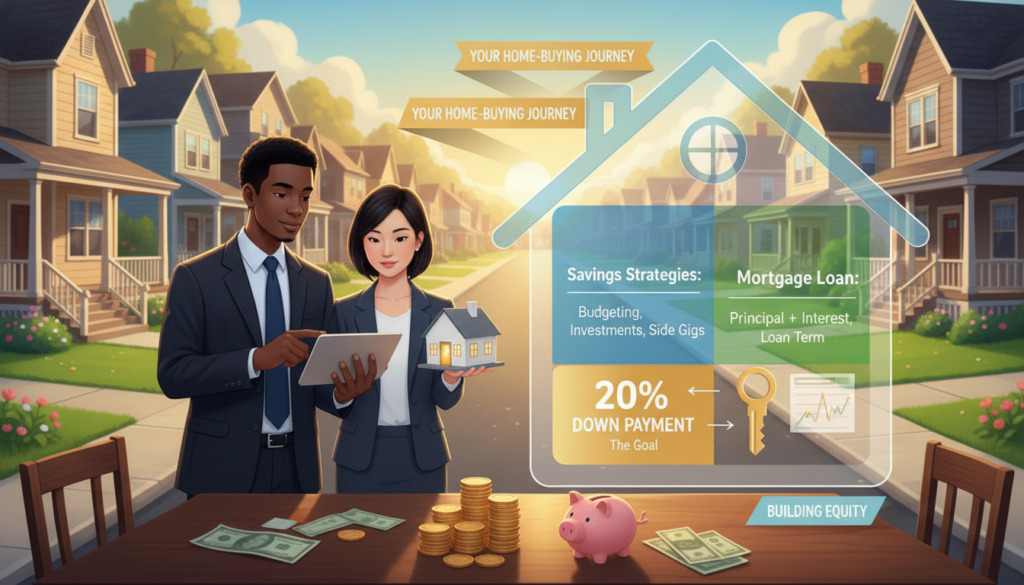
Can a small upfront sum change how fast you build equity and lower your interest over decades?
Understanding this concept is your first step if you plan to buy a home in the United States. A down payment is the portion of the house price you pay in cash instead of financing with a mortgage loan.
Typical amounts range widely by loan type, from about 3% to 20% or more. Your credit and the mortgage rate lenders offer will shape your options and monthly payments.
Smart planning matters: a well-chosen initial payment can cut long-term interest, build equity fast, and reduce the need for mortgage insurance. For practical guidance, see this guide to what you need for a down.
Table of Contents
- Understanding the Basics of a Down Payment
- Down Payment USA Explained for Modern Buyers
- How Your Initial Investment Works at Closing
- Minimum Requirements by Loan Program
- The Role of Credit Scores and Financial Health
- Weighing the Benefits of a Larger Upfront Payment
- Potential Drawbacks of Draining Your Savings
- Navigating Private Mortgage Insurance
- Strategic Tips for Building Your Down Payment Fund
- Exploring Assistance Programs and Grants
- Making the Right Financial Choice for Your Future
- FAQ
Understanding the Basics of a Down Payment

Your initial cash investment in a house directly changes how much you finance and your loan terms. It is the portion of the home purchase price you pay upfront instead of including in the mortgage.
Defining the Concept
A down payment is your first ownership stake in a property. It reduces the total loan amount and shows lenders you have money invested in the purchase.
Why Lenders Require It
Lenders ask for this payment to lower their risk. When you contribute a larger percentage of the purchase price, the lender faces less exposure if you default.
- Putting more cash up front can qualify you for a lower interest rate, which saves money over the life of the mortgage.
- A smaller loan balance means more manageable monthly payments and less total interest paid.
- Lenders view a higher amount as proof of strong credit and commitment from the buyer.
If you want to learn how interest affects your mortgage choices, see this mortgage interest guide to plan your strategy.
Down Payment USA Explained for Modern Buyers

Many modern buyers put less cash upfront and still secure a mortgage that fits their goals.
The landscape has shifted: the median down for first-time buyers in 2024 was just 9 percent of the home purchase price, according to the National Association of Realtors.
You should balance how much money you save for the initial amount with your monthly budget and long-term plans.
- You do not always need 20 percent to buy a house; smaller sums can unlock a loan sooner.
- Putting less cash means higher monthly payments, so plan for the extra cost over time.
- Think beyond the payment: closing fees, taxes, and maintenance affect the total purchase cost.
- Use programs that help buyers; many options reduce the cash required at the start.
Bottom line: choose a percentage of the purchase price that fits your income and future goals. That way you make a smart home purchase without sacrificing financial health.
How Your Initial Investment Works at Closing
Closing day moves your initial funds into a secure escrow account managed by a settlement officer.
The escrow role is simple: the escrow account holds your money until the sale is finalized. A neutral real estate attorney or settlement officer manages that account to protect both buyer and seller.
The Role of Escrow
The escrow process ensures the seller receives funds only after title and paperwork clear. Your lender issues a loan estimate listing the exact amount you must bring to closing, including fees and the upfront portion of the purchase price.
- Using a mortgage calculator helps you see how the initial amount affects monthly mortgage and total interest over 30 years. For example, a 30-year fixed loan at a 6.5% interest rate on a $375,000 home is a common benchmark.
- A larger upfront amount lowers the principal, increases immediate equity, and cuts future monthly payments.
- Work with a professional so your funds are applied correctly at closing.
"Escrow guarantees the safe transfer of funds and ownership when all terms are met."
| Item | Effect | Why it matters |
|---|---|---|
| Escrow account | Holds buyer's money securely | Protects both parties until closing |
| Loan estimate | Shows exact amount due | Prevents surprises at closing |
| Higher initial amount | Reduces principal and interest | Lowers monthly mortgage and builds equity |
Learn more about mortgage basics and closing costs in our mortgage loan guide.
Minimum Requirements by Loan Program
Loan programs set different minimums, so the cash you must bring can vary by product and borrower profile.
Conventional Loan Standards
Conventional loans typically require a minimum of 3 percent of the purchase price.
Your exact requirement may change with your credit score and lender rules. A lower amount can increase your monthly payment and may trigger mortgage insurance.
FHA and Government Backed Options
FHA loans lower the entry barrier for many buyers. You can qualify with 3.5 percent if your credit score is 580 or higher.
These loans often let buyers with limited income buy a home sooner, though private mortgage insurance usually applies when your upfront share is under 20 percent.
VA and USDA Zero Down Paths
If you are a veteran or active military, VA loans can offer zero initial amount and no private mortgage insurance for eligible buyers.
USDA loans also provide zero options for qualified borrowers in approved rural or suburban areas. Income limits and property rules apply.
- Conventional: ~3% minimum, varies by lender and score.
- FHA: 3.5% with a 580 score or better.
- VA/USDA: possible zero, subject to eligibility.
Before closing, review which type fits your income and credit so you avoid surprises. For a clear application checklist, see the steps to apply for a mortgage.
The Role of Credit Scores and Financial Health
A strong credit history can unlock more favorable loan terms and lower interest costs over time.
Your credit score is a primary factor lenders use to judge your eligibility for a mortgage or other loans. A higher score often means better offers and smaller required initial payment amounts.
Financial health matters too. Lenders check your debt-to-income ratio to see if you can handle monthly payments without strain. That ratio can affect the loan size a lender will approve.
- Maintain on-time payments to show responsible use of credit.
- Lower debt improves your borrowing profile and reduces perceived risk.
- Check your credit report regularly to correct errors that hurt your score.
Tip: Improving your score before you apply can save thousands in interest across the life of a mortgage. For a practical checklist on getting ready, see our guide to preparing to buy a house.
| Score range | Typical lender view | Likely effect on loan |
|---|---|---|
| 760–850 | Low risk | Best rates, lower upfront amounts |
| 700–759 | Good risk | Competitive rates, standard offers |
| 620–699 | Moderate risk | Higher rates, may need larger initial share |
| Below 620 | Higher risk | Limited loan options, higher interest and reserves |
"Your credit profile tells lenders how you manage obligations; strengthen it to improve your loan options."
Weighing the Benefits of a Larger Upfront Payment
Putting a larger amount toward your home purchase often lowers how much you must borrow and improves the loan terms you qualify for.
Impact on Interest Rates
A bigger upfront sum frequently helps you secure a lower interest rate. Lenders see this as a sign of stability, which can translate to better offers.
Real-world example: a 20 percent contribution on a $400,000 home can save more than $78,000 over a 30-year mortgage in total interest.
- Making a larger payment reduces the principal, so your monthly mortgage payments drop.
- Use a mortgage calculator to compare how different amounts affect rates, total interest, and monthly payment.
- A larger sum signals financial strength to lenders and can unlock lower rates and better loan terms.
"Choosing to invest more up front often pays back in lower interest and more affordable monthly payments."
Balance potential savings with the need to keep emergency savings. For guidance on ideal contribution sizes, see our first-time homebuyer guide.
Potential Drawbacks of Draining Your Savings
A large one-time withdrawal from your savings can affect more than just your mortgage terms.
Using most of your cash for a larger payment reduces how much you borrow, but it also leaves little money for repairs, moving costs, or job interruptions.
If unexpected home repairs occur, you may need to borrow at higher rates or tap high-interest credit. That can erase savings from a lower interest rate on your loan.
Consider opportunity cost: money used now might pay off high-interest debt or earn returns in investments. At the same time, taking more time to save could mean missing current home prices as rates and costs change.
Keeping more cash on hand may raise your monthly payments, yet it preserves a safety buffer for immediate needs after you move in.
- Balance a larger payment with emergency savings so routine costs do not become a crisis.
- If rates fall or your finances improve, you can often refinance the loan to lower your rate later.
"Always maintain a buffer of savings so that your payment may not leave you vulnerable to sudden financial changes."
If you put less than 20 percent toward your home on a conventional loan, private mortgage insurance usually applies.
Why it exists: lenders require mortgage insurance to protect the loan if you default. That protection raises your monthly payment until you build sufficient equity.
- Private mortgage insurance is typically required by lenders for conventional loans when your upfront share is under 20 percent.
- This insurance protects the lender but adds extra cost to your monthly payments.
- Once you reach 20 percent equity, you can request removal of private mortgage insurance to lower your payment.
- Automatic cancellation happens when your loan balance hits 78 percent of the original home value.
Different loans have varied rules, so check with your lender about how PMI applies to your loan type. For a clear primer on PMI terms, see this PMI guide, and to compare common loan options visit our types of mortgage loans.
"Plan your equity path early: reaching the 20 percent mark can remove private mortgage insurance and lower long-term costs."
Strategic Tips for Building Your Down Payment Fund
Start with a clear savings plan so small, steady contributions add up toward your home goal. A simple routine lets you move from planning to action without stress.
Automating Your Savings
Automate transfers from each paycheck into a dedicated account. That makes saving habitual and removes the guesswork from budgeting.
Review your monthly income and expenses. Cut one or two recurring costs and send the difference to your savings each month.
High Yield Accounts
Keep your money in a high-yield savings account or a short-term certificate of deposit to earn better interest while you save.
- Use a savings calculator to set targets and track progress.
- Improve your credit score as you save so you qualify for stronger mortgage and loan offers later.
- Research local assistance programs and compare options in our fixed vs variable mortgage guide for planning.
"Consistent, small contributions beat waiting for a windfall every time."
Exploring Assistance Programs and Grants
Local and state programs can bridge the gap between your savings and the money needed at closing.
Many states and cities offer grants and low-interest loans to help first-time buyers afford a house. These programs can lower the amount you must bring at closing and make a home purchase more attainable.
Eligibility usually depends on your income, the type of home, and whether you are a first-time buyer. Some help is a deferred loan, so you may not repay it until you sell or refinance.
Research local housing authority websites to find grants that cover closing costs and initial costs. Always read program rules closely; the payment may require you to live in the home for a set time.
- Programs reduce upfront cost and protect your savings for insurance and maintenance.
- Some options are grants; others are repayable loans with low or deferred terms.
- Working with a mortgage loan officer speeds identification of programs you qualify for.
"Using available programs can keep more of your money for life after closing."
For an overview of options, see a guide on down payment assistance, or learn practical steps to buy a home in our how to buy a house resource.
Making the Right Financial Choice for Your Future
A thoughtful initial contribution can cut your interest rate, lower interest over time, and shrink your monthly mortgage payment. Choose an amount that improves terms while keeping enough cash for emergencies.
Private mortgage insurance often applies when your share is small, but it is temporary. As you build equity in your home, mortgage insurance can be removed and your payments will fall.
Talk with your lender to see how different choices affect overall interest and loan terms. Focus on credit health and stability so you qualify for a lower interest rate and the best possible terms for your future.
FAQ
What is an initial investment when you buy a home?
The initial investment is the cash you bring to closing to reduce the loan amount. It lowers how much you borrow, affects monthly mortgage costs, and can influence the interest rate and whether you must pay private mortgage insurance.
Why do lenders ask for an upfront fund before approving my mortgage?
Lenders require this fund to reduce their risk if you default. It creates immediate equity in the property, shows your financial commitment, and helps determine loan terms and mortgage insurance requirements.
How does a larger upfront contribution affect my interest rate and monthly bill?
A larger contribution typically means you borrow less, which can qualify you for a lower interest rate and smaller monthly payments. Lenders may offer better rates to borrowers with more equity and stronger credit.
What are typical minimum requirements for conventional loans?
Conventional lenders often ask for a modest percentage of the purchase price as an upfront amount, depending on credit, income, and debt-to-income ratio. Meeting the lender’s standards may help you avoid private mortgage insurance.
How do FHA and other government-backed programs differ on initial cash needs?
FHA loans allow lower upfront contributions than many conventional loans and accept lower credit scores. VA and USDA loans can offer zero-upfront options for eligible veterans and rural buyers, respectively, but eligibility and fees vary.
What role does escrow play in the closing process?
Escrow is a neutral account that holds funds and documents until all closing conditions are met. Your earnest money and closing costs may pass through escrow to ensure the sale closes smoothly and funds are disbursed correctly.
How do credit scores and overall financial health affect my requirements?
Higher credit scores and stable income reduce lender risk, which can lower required upfront amounts and get you better rates. Weak credit or inconsistent income can increase required reserves or lead to higher costs.
Will paying more upfront always save me money over time?
Paying more upfront usually reduces your interest expense and monthly obligation, but it isn’t always best if it depletes emergency savings. Balance immediate savings against liquidity and future financial goals.
What is private mortgage insurance and when will I pay it?
Private mortgage insurance protects the lender when your upfront contribution is below a certain threshold. You typically pay it until you build sufficient equity or refinance into a loan without PMI requirements.
Are there drawbacks to using most of my savings for the initial contribution?
Yes. Draining savings increases financial risk from unexpected repairs, job loss, or other emergencies. Keep an emergency fund even if you want to lower monthly mortgage costs.
How can you build your initial fund more quickly?
Automate transfers to a dedicated savings account, reduce discretionary spending, and funnel bonuses or tax refunds into the fund. High-yield savings or short-term CDs can grow your balance while keeping liquidity.
What assistance programs can help first-time or low-income buyers?
Federal, state, and local programs offer down payment grants, low-interest second loans, and tax credits. FHA, Fannie Mae HomeReady, and HUD resources are common starting points; check your state housing authority for local options.
How do you choose the right option for your long-term finances?
Evaluate interest rates, monthly cash flow, emergency reserves, tax consequences, and the timeline you expect to stay in the home. Use mortgage calculators, consult lenders, and consider advice from a certified financial planner or housing counselor.
If you want to know other articles similar to Down Payment USA Explained A Guide for Home Buyers You can visit the category Mortgage.
Credit Needed for Mortgage USA Guide for Homebuyers

How to Compare Mortgage Rates to Find the Best Deal

Mortgage Requirements USA What You Need to Know Today

What Lenders Look For to Approve Your Home Loan

Income Requirements Mortgage USA What You Need to Know

Mortgage Rates USA Explained What You Need to Know
Leave a Reply
VISIT THESE INTERESTING ARTICLES📚