
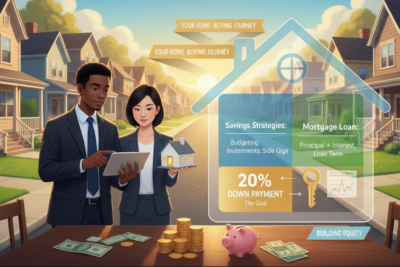
How to Qualify for a Mortgage A Simple Guide for You

Curious which moves will make lenders say "yes" when you apply for a home loan? The answer is clearer than many think, and it starts with four core areas lenders check: capacity, capital, collateral, and credit.
Your income, job history, and monthly debt matter. Lenders review gross monthly income and debt levels to judge payment risk. They often use a dti ratio rule of thumb to see if mortgage payments fit your budget.
Prepare tax returns, bank statements, and proof of employment early. That paperwork speeds preapproval and shows lenders your financial picture. Learn more practical steps and timelines on this helpful guide at Bankrate.
Whether you are a first-time buyer or returning to the market, understanding these checks helps you plan down payments, closing costs, and credit improvements. Keep reading for clear, actionable steps that boost your chances at closing on the right property.
Table of Contents
- Understanding the Mortgage Qualification Process
- The Four Core Components Lenders Evaluate
- How to Qualify for a Mortgage Using Your Financial Profile
- Managing Your Debt to Income Ratio
- The Role of Credit Scores and History
- Comparing Conventional and Government Backed Loan Programs
- Navigating Down Payments and Closing Costs
- Requirements for Investment and Multiunit Properties
- Essential Documentation for Your Application
- Preparing for a Successful Homebuying Journey
- FAQ
Understanding the Mortgage Qualification Process

Lenders review several documents and metrics to decide if your loan request fits their rules. This review centers on income stability, credit history, and the planned home's value.
Many lenders suggest the 30% rule: keep monthly housing payments under 30% of gross income. Underwriting also checks at least two years of federal tax returns and W-2s to confirm steady earnings.
Your employment history over the past two years matters. Lenders want proof you can make regular payments and handle interest and other costs.
- Credit score gives lenders a snapshot of past debt management.
- You must show enough money for the down payment and closing costs.
- An appraisal verifies the property is worth the agreed loan amount.
In short: clear documents, stable income, solid score, and a clean appraisal speed approval. These parts form the core requirements lenders use when evaluating your application.
The Four Core Components Lenders Evaluate

Lenders weigh four main areas that shape your loan approval odds. Each area gives a snapshot of risk and capacity. Understand them so you can present a clearer profile when applying.
Capacity to Pay
Capacity means your regular income, job stability, and monthly debt. Lenders check pay stubs, employment history, and recurring obligations like car loans or student payments.
Tip: Stable income and low monthly debt improve your chances and may lower the interest you receive.
Capital and Reserves
Capital refers to savings, investments, and cash reserves you can tap during emergencies. Lenders favor buyers who show liquid funds for down payments and several months of mortgage payments.
Collateral and Appraisals
Collateral is the home you plan to buy. An appraisal confirms fair market value and protects the lender against overpaying.
- Cash reserves show you can cover unexpected bills or gaps in income.
- Your credit score affects rate tiers and down payment expectations.
- Strong documentation of income and reserves signals low risk.
| Component | What Lenders Check | Why It Matters |
|---|---|---|
| Capacity | Income, employment history, monthly debt | Shows ability to make regular payments |
| Capital | Savings, investments, liquid reserves | Provides safety net and down payment proof |
| Collateral | Appraisal of the property | Ensures loan amount matches property value |
| Credit | Credit score and history | Drives rates and eligibility |
For a concise overview of these pillars, see the 4 Cs. For more on the overall mortgage process, check this mortgage process guide.
How to Qualify for a Mortgage Using Your Financial Profile
A clear financial profile makes lenders more likely t approve your loan request. Focus on steady income, low monthly obligations, and visible cash reserves. These elements show you can handle monthly payments and unexpected costs.
Start by organizing pay stubs, bank statements, and tax returns. Lenders often want at least two years of employment history. That history gives them confidence in your ability to make on-time payments.
- Income: Show consistent earnings and documented sources.
- Credit and score: Keep balances low and correct any errors on reports.
- Cash reserves: Maintain funds for down payment and several months of payments.
Manage debt proactively and build savings. A stronger profile can reduce interest and expand loan options. For a deeper look at the core evaluation criteria, see the 4 Cs.
Managing Your Debt to Income Ratio
Your debt-to-income percentage is a simple number that can change approval odds. Lenders use this figure to see if your gross monthly income covers current obligations plus a new loan payment.
Calculating Your Monthly Obligations
Start by adding every recurring payment: car notes, student loans, minimum credit card payments, alimony, and other monthly debt.
Divide that total by your gross monthly income. The result is your dti ratio.
Many loan programs expect a dti ratio at or under 43%. Some lenders may allow more if your credit score and reserves are strong.
- Include all steady payments when you total obligations.
- Paying down high-interest balances helps reduce your ratio quickly.
- Lowering monthly debt keeps mortgage payments aligned with the 30% housing guideline.
Action step: focus on small, consistent reductions in credit card and personal loan balances. That improves your income ratio and raises the chance that lenders will offer better loan terms.
The Role of Credit Scores and History
A strong credit profile can lower interest and open better loan choices when buying a home. Lenders glance at your score and past payment behavior to judge risk. That view influences the rate, required down payment, and whether your application moves forward.
Improving Your Credit Health
Pay bills on time and trim balances on any card accounts. Small, steady reductions in debt improve your score and show lenders you manage payments well.
Tip: You can request a free copy of your credit report once every 12 months by calling 877-322-8228. Regular checks let you spot errors and fix them before an application.
Understanding Credit Utilization
Credit utilization is the share of available credit you use. Aim for around 30% to keep your score healthy. Lower utilization often leads to better loan offers and lower interest.
"Your credit score is the single number lenders use most when setting rates and requirements."
| Item | Why it matters | Action |
|---|---|---|
| Score | Sets interest and eligibility | Pay on time; dispute errors |
| Utilization | Impacts score quickly | Keep balances near 30% or less |
| History | Shows long-term behavior | Keep old accounts open where sensible |
Next step: review your credit, reduce card balances, and read this short guide about home affordability basics to see how score and income affect loan options.
Comparing Conventional and Government Backed Loan Programs
Loan types vary widely in down payment needs, maximum limits, and credit flexibility. Conventional loans follow Fannie Mae and Freddie Mac guidelines and remain the most popular choice. For 2026, conforming limits top out at $832,750 for a single-family property.
FHA loans are backed by the Federal Housing Administration and allow more leeway in credit score and minimum credit requirements. Their 2026 limits reach $541,287 in most areas. If your credit or down payment is limited, FHA may lower the barrier to purchase.
Other government options: VA loans offer no down payment and no private mortgage insurance for eligible military borrowers. USDA loans serve rural homebuyers with low- and moderate-income and can also require zero down.
| Program | Key benefit | Typical requirement |
|---|---|---|
| Conventional | Low rates for strong profiles | At least 3% down; conforming limit $832,750 |
| FHA | Flexible credit rules | Higher acceptance of lower scores; limit $541,287 |
| VA / USDA | Zero down options | Service or location eligibility; specific occupancy rules |
Compare DTI ratio caps carefully: some programs limit borrowers near 41% while others permit 45% or more when reserves and score are strong. Also check property, occupancy, and cash reserves rules, since these affect closing and the final loan amount.
For a focused comparison that helps homebuyers choose, read this guide on FHA vs conventional loans.
Budgeting for purchase costs beyond the down payment prevents surprises on the closing statement. Average closing costs usually range between 2% and 5% of your total loan amount. That range covers lender fees, third-party charges, and required government recording fees.
Understanding Closing Costs
Closing costs often include origination fees, points, appraisal charges, title insurance, and prepaid escrows for taxes and insurance. These prepaid items help cover future payments that your lender will expect.
- Down payment is separate and may vary from 0% up to 20% of the purchase price depending on the loan program.
- Origination fees and points appear on the loan estimate—review them carefully with your lender.
- Third-party fees such as appraisal and title services are typical and non-negotiable in many cases.
- Make sure you have enough money saved for both the down payment and closing costs to avoid delays at signing.
For step-by-step planning and a checklist that guides cash needs at closing, see this short guide on buy a house in the USA.
Requirements for Investment and Multiunit Properties
Lenders treat investment and multiunit properties as higher risk, so underwriting standards are stricter than for a primary residence.
Expect a minimum down payment near 20% for most investment purchases. Many lenders also look for a credit score of at least 620 before they consider an investor loan.
When you buy a two-unit home, underwriters often want a higher score—commonly around 700—to lower perceived risk. You must show proof of rental income when the application relies on future rents to cover loan payments.
Reserves matter: lenders may ask for up to six months of cash reserves for multiunit buys. Those funds cover vacancies, repairs, and unexpected bills.
- House hacking living in one unit can let you use some government-backed programs with lower down payments.
- Always confirm specific property requirements with your lender. Investment rules vary and are tighter than for primary home loans.
"Underwriting for investment and multiunit loans focuses on higher down payments, stronger credit, and clear rental income."
For a quick overview of available options and program details, see types of mortgage loans.
Essential Documentation for Your Application
Organized financial records give lenders a clear view of your ability to pay. Gather at least two years of employment history and proof of income before you apply. Lenders typically want federal tax returns and W-2s for the past two years.
Also collect bank statements for the last two months to show cash reserves and the down payment source. Include statements that document all monthly debt: student loans, car payments, and credit card balances.
Provide accurate, complete files so underwriting moves without needless delays. Your loan officer will use these documents to calculate the dti ratio and confirm you meet program requirements for your chosen home loan.
- Must-have items: two years of tax returns and W-2s.
- Recent bank statements showing reserves and payment sources.
- Records of recurring payments and outstanding debt.
Make sure documents match across forms and statements. Clean records improve your score with lenders and speed final approval, reducing surprises at payment closing or when covering closing costs.
Preparing for a Successful Homebuying Journey
Begin with a clear snapshot of income, savings, and monthly obligations, and keep those records current. This helps you set realistic goals and avoids surprises during underwriting.
Organize your finances and check your credit early. Getting preapproved gives you a concrete budget and shows sellers you are serious.
Stay in regular contact with your lender so requirements are met and closing stays on schedule. Keep long‑term affordability in mind so your new home remains comfortable for years.
For practical next steps, review this guide on preparing for the homebuying journey and this checklist on preparing to buy a house.
FAQ
What does a lender look at when assessing your application?
Lenders review your employment history, gross monthly income, credit score and payment history, monthly debt obligations, savings and reserves, and the property’s appraisal. They want to see steady income, low outstanding debt, sufficient down payment, and clear title. Loan type and years of credit history also affect approval and interest rate.
What minimum credit score do most lenders expect?
Conventional loans often require scores near 620 or higher. FHA programs accept lower scores, sometimes around 580 with a larger down payment. VA and USDA loans don’t set a universal minimum, but lenders typically prefer higher scores to offer the best terms.
How is your debt-to-income (DTI) ratio calculated?
Add your monthly debts—credit card minimums, student loans, car payments, and the proposed mortgage payment including taxes and insurance—then divide by gross monthly income. Lenders generally like a front-end ratio under 28% and overall DTI under 43%, though some programs allow higher limits.
What documents do you need with your application?
Prepare at least two years of W-2s, two recent pay stubs, last two years of tax returns if self-employed, bank statements showing reserves, and ID. You may also need asset statements, rental agreements, and explanations for large deposits or gaps in employment.
How much down payment is required?
Down payment varies by loan: conventional loans often ask for 5%–20%, FHA can accept as little as 3.5%, and VA/USDA loans may offer no down payment for eligible borrowers. Larger down payments reduce loan amount, lower monthly payment, and may eliminate private mortgage insurance.
Can recent credit issues disqualify you?
Recent late payments, collections, or bankruptcy can increase scrutiny. Timeframes matter: bankruptcy typically requires two to four years from discharge for many programs, and foreclosure often requires a similar wait. Improving payment history and reducing outstanding balances helps your case.
Do lenders verify employment and income?
Yes. Lenders contact employers, review pay stubs, and compare tax returns to reported income. If you’re self-employed, expect more documentation like profit-and-loss statements, 1099s, and business tax returns. Stable, verifiable income strengthens approval odds.
How do property type and appraisal affect approval?
Lenders require an appraisal to confirm fair market value and habitability. Condos, multiunit buildings, and investment properties may face stricter underwriting and higher down payment requirements. If the appraisal comes in low, you may need a larger down payment or renegotiate the price.
What are closing costs and how much should you expect?
Closing costs cover lender fees, title insurance, taxes, and prepaid items like insurance and interest. Expect roughly 2%–5% of the purchase price. You can sometimes roll certain fees into the loan or request seller concessions to offset out-of-pocket expenses.
How can you improve your chances before applying?
Reduce credit card balances, avoid new credit inquiries, gather documentation, and save for reserves. Check your credit reports for errors and dispute inaccuracies. Stabilize employment and avoid large purchases that increase monthly obligations before closing.
Are there special rules for investment or multiunit purchases?
Yes. Lenders often require higher down payments, stronger credit, and larger reserves for investment and multiunit homes. Rental income may be considered, but documentation and vacancy factors apply. Qualification standards vary significantly by loan program.
What role does mortgage insurance play?
Private mortgage insurance (PMI) protects lenders when your down payment is under 20% on conventional loans. FHA loans charge an upfront and annual mortgage insurance premium. Removing PMI usually requires reaching 20% equity through payments or appreciation.
Can you qualify if self-employed or with irregular income?
Yes, but you’ll need tax returns for the last two years, a year-to-date profit-and-loss statement, and possibly a CPA letter. Lenders average income over time and may add back certain non-cash expenses. Consistent documentation and stable revenue help approvals.
How does credit utilization affect your score?
Credit utilization—the ratio of balances to limits—impacts scores significantly. Aim to keep utilization below 30%, and lower if possible. Paying down revolving balances before applying can raise your score and improve the mortgage terms you’re offered.
What factors influence the interest rate you’ll receive?
Credit score, loan-to-value ratio, loan type, loan term, property type, and market conditions all influence rates. Locking a rate requires a commitment and may involve a fee. Higher scores and larger down payments generally secure lower interest rates.
If you want to know other articles similar to How to Qualify for a Mortgage A Simple Guide for You You can visit the category Mortgage.
Down Payment USA Explained A Guide for Home Buyers

Credit Needed for Mortgage USA Guide for Homebuyers

How to Compare Mortgage Rates to Find the Best Deal

Mortgage Requirements USA What You Need to Know Today

What Lenders Look For to Approve Your Home Loan

Income Requirements Mortgage USA What You Need to Know
Leave a Reply
VISIT THESE INTERESTING ARTICLES📚