

Home Buying for Beginners USA How to Buy Your First Home

Ready to challenge the idea that buying a house must be confusing and slow? You can demystify the process and make smart choices in today’s real estate market.
This concise guide lays out clear steps and practical tips so you know what to expect at each stage. You’ll learn how to prepare finances, compare lenders, and handle the mortgage process without feeling overwhelmed.
As a first-time buyer, you’re part of a large group shaping demand right now. Use our linked walkthrough of the full process to plan timing and documents, and review lender and inspection guidance to avoid common pitfalls: the homebuying process, and practical checks on timeline and costs here: how to buy a house in the.
In the pages that follow, you’ll find bite-sized steps that help you transition from renting to confident homeownership over the next few years.
Table of Contents
- Understanding the Home Buying for Beginners USA Journey
- Assessing Your Financial Readiness
- Calculating Your Debt to Income Ratio
- Managing Your Credit Score and History
- Determining Your Total Housing Budget
- Exploring Mortgage Financing Options
- Getting Preapproved for a Loan
- Working with a Real Estate Agent
- Creating Your Property Wishlist
- Navigating Home Showings and Inspections
- Making a Competitive Offer
- Understanding the Appraisal and Underwriting Process
- Managing Closing Costs and Escrow
- Finalizing the Purchase Agreement
- Preparing for Your Move
- Embracing Your New Life as a Homeowner
- FAQ
Understanding the Home Buying for Beginners USA Journey
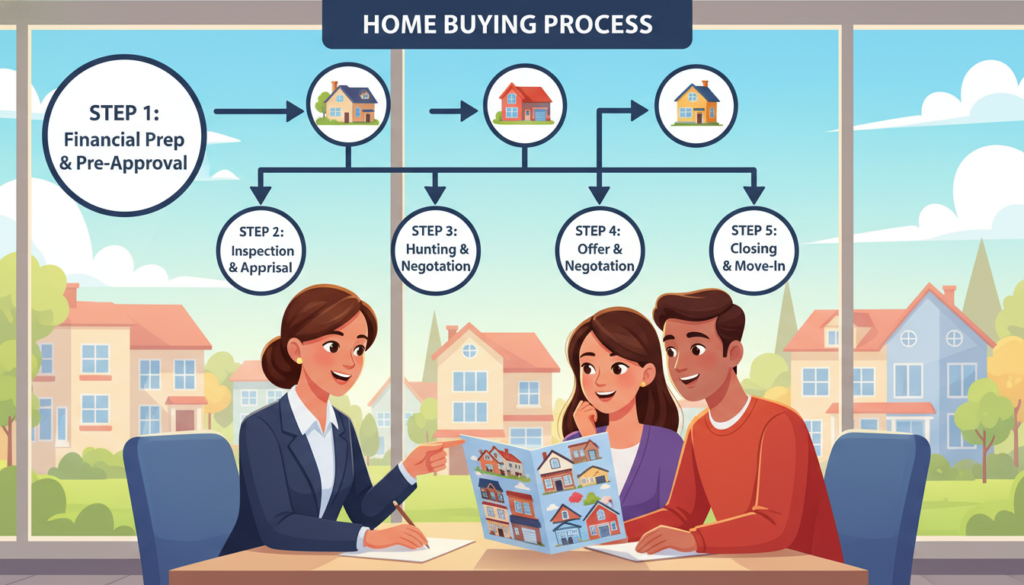
The route from renting to owning is a staged process that rewards steady preparation. Each phase takes time and a clear set of steps you can follow.
Plan across years, not weeks. The current market shifts, and many buyers move in phases: credit work, savings, lender research, and targeted searches. That gradual approach reduces stress and costly mistakes.
- The journey is a multi-year commitment requiring planning and market awareness.
- About 32 percent of all buyers in 2024 were first-time purchasers entering the market.
- This guide lists essential steps to prepare you for the financial side of owning a house.
"Understanding the process is a vital part of your success."
Use each stage to evaluate readiness, set realistic timelines, and build a stronger path to long-term homeownership.
Assessing Your Financial Readiness

Before you shop, take a clear look at your finances to know what you can realistically afford.
Start with monthly totals. Add your after-tax income and list recurring debts and living expenses. This quick snapshot shows whether your projected mortgage payments will fit your budget.
Down Payment Requirements
A down payment is a major upfront amount. First-time buyers typically put down about 7 percent of the purchase price.
However, an FHA loan may let you start with as little as 3.5 percent down. Compare how those options affect your monthly payments and loan terms.
Savings Strategies
Set a savings target based on your desired purchase price and expected closing costs. Track short-term and long-term expenses to free up money more quickly.
Explore assistance programs and low-down-payment loans to reduce the cash you need at closing. Keep emergency funds separate so payments stay manageable over time.
| Scenario | Down Payment | Monthly Mortgage Impact | Recommended Action |
|---|---|---|---|
| Average first-time | 7% of price | Moderate payments | Save over 12–24 months |
| FHA-qualified | 3.5% of price | Higher monthly payments | Compare loan costs and PMI |
| Higher down | 15%–20% | Lower payments | Aim to reduce interest |
| Assistance programs | Varies | Depends on program | Check local/state options |
"Calculating your budget now saves surprises later."
Calculating Your Debt to Income Ratio
A clear DTI number helps you and lenders know the monthly amount you can safely handle.
Your debt-to-income ratio is a key measurement lenders use to decide how much mortgage or loan you can afford. To calculate it, add all monthly debt payments and divide that total by your gross monthly income.
Most lenders see a DTI of 36 percent or lower as healthy. That level shows you have room in your budget for a new mortgage payment without straining other bills.
- Include credit cards, auto loans, student debt, and the projected mortgage payment in your totals.
- A high DTI signals risk to lenders and can raise interest or limit loan options.
- Paying down balances reduces your DTI and frees up money for a larger down payment or lower monthly payments.
"Keeping your DTI within recommended ranges improves your chances of securing better loan terms."
Managing Your Credit Score and History
Your credit history shapes how lenders view you and what loan terms you can access.
Know the targets. A FICO score of 620 or higher is a common benchmark to secure most mortgages. Some FHA programs accept scores down to 580, but rates and requirements may differ.
Monitor and act. Check your credit reports regularly and dispute any errors with Equifax, Experian, and TransUnion. Correcting mistakes can raise your score and improve loan options.
Disputing Credit Report Errors
Gather documentation, file disputes online with each bureau, and follow up until the record is fixed. If an item is inaccurate, ask the creditor to verify or remove it.
- Keep utilization at or below 30 percent to show stability.
- Avoid opening new accounts while you pursue approval for a loan.
- Pay down high-balance cards first to lower DTI and support a stronger credit profile.
| Action | Why it matters | Expected impact | When to act |
|---|---|---|---|
| Review reports | Find errors early | Possible quick score gain | At least once a year |
| Lower utilization | Shows responsible credit use | Improves creditor view | Ongoing until |
| Hold new credit | Prevents score dips | Stabilizes loan approval odds | While applying for loans |
| Dispute inaccuracies | Removes false negatives | Better offers from lenders | Immediately when found |
"By managing your credit responsibly, you increase your chances of being approved and securing better financing terms."
For guidance on boosting your credit and accessing programs that help with qualifying, see credit help.
Determining Your Total Housing Budget
To avoid surprises, calculate the full monthly obligation: mortgage principal and interest, taxes, insurance, and extras.
Start with the base figures. Add the likely loan payment and the expected property price to set a baseline. Then layer recurring charges onto that amount.
Include these recurring items:
- Property taxes and homeowners insurance
- Private mortgage insurance if your down payment is under 20 percent
- HOA dues, utility averages, and regular maintenance reserves
Build a simple spreadsheet that lists your monthly income, all debt, and every housing-related cost. This shows the true share of your income that payments will consume.
Plan for long-term upkeep. Set aside a maintenance fund to cover repairs and aging systems so the amount you spend stays sustainable.
| Expense | Typical Monthly Range | Why it matters |
|---|---|---|
| Mortgage principal & interest | $800–$2,500 | Makes up the largest portion of monthly payments |
| Property taxes | $100–$600 | Varies by price and local rates |
| Insurance (hazard & private mortgage) | $50–$400 | Protects your investment and affects loan approval |
| HOA & maintenance | $0–$500 | Covers shared services and ongoing repairs |
"A comprehensive budget prevents surprises and keeps your housing costs within safe limits."
For a guided worksheet and deeper calculations, see our guide to determining your budget.
Exploring Mortgage Financing Options
Choosing the right mortgage product shapes your monthly cost and long-term interest burden. Review options early so you can compare rates, terms, and expected payments.
Conventional Loans
Conventional loans often need higher credit scores. They can offer lower long-term interest if you qualify.
Pros: Lower rates for strong credit, flexible terms.
FHA and USDA Programs
The FHA route allows smaller down payments and more lenient credit rules.
The U.S. Department of Agriculture also offers specific loans for rural buyers that may reduce upfront cash needs.
VA Loan Benefits
If you are a veteran, a VA loan can remove private mortgage insurance and may allow zero down payment.
Tip: Check each product's interest and payment structure before committing.
"Compare loan terms and projected interest to see which option lowers your total cost."
| Loan Type | Typical Down | Credit Need | Key Benefit |
|---|---|---|---|
| Conventional | 5%–20% | Good to excellent | Lower long-term interest |
| FHA | 3.5% | Fair | Lower entry requirements |
| USDA | 0%–low | Varies | Rural buyer assistance |
| VA | 0% possible | Service eligibility | No PMI, veteran benefits |
Next step: Get details and use a tool to estimate monthly payment and compare scenarios. See our first-time buyer guide for a full walkthrough.
Getting Preapproved for a Loan
Securing preapproval gives you a clear price range and signals you are a serious contender on offers.
The process is straightforward. Lenders will verify your credit, income, and monthly debts. They use those details to set a maximum loan amount and estimate monthly mortgage payments.
A preapproval letter defines your budget. It lets you focus on listings that match what you can actually afford. In many markets, sellers prefer offers backed by verified financing.
When you apply, expect to provide tax returns, pay stubs, and bank statements. That documentation speeds verification and reduces surprises during underwriting.
Locking rates during preapproval can protect you from short-term interest swings while you shop. Ask your lender how long the quoted rates and terms remain valid.
"A solid preapproval gives you confidence and a competitive edge when you make an offer."
- Verify multiple lenders to compare loan terms and rates.
- Keep credit steady and avoid new debt during the process.
- Use the preapproval letter to target realistic properties and move quickly when you find one.
Working with a Real Estate Agent
A skilled agent turns complex transactions into clear, manageable steps. You benefit from a professional who knows local listings, contract language, and negotiation tactics.
The Role of a Buyer Representative
A buyer representative protects your interests during offers and inspections. They review contracts, spot red flags, and help you avoid costly mistakes.
- A dedicated real estate agent schedules tours and identifies properties that match your criteria and budget.
- Your estate agent uses local market data to assess fair pricing and advise offer strategy.
- An experienced agent coordinates inspections and ensures contingencies are handled correctly before closing.
Quick wins: save time, reduce stress, and strengthen your negotiating position when you work with a qualified agent.
"A good agent acts as your advocate and simplifies each step of the transaction."
Want a checklist to guide conversations? See questions to ask your property agent to make sure you cover key points with potential representatives.
Creating Your Property Wishlist
A clear wishlist turns vague preferences into actionable search criteria.
Start by listing must-haves versus nice-to-haves. Name top features: location, size, and key amenities. This keeps your search tight in a busy real estate market.
Think about long-term value. A property that fits today may need updates later. Consider how the estate and neighborhood may serve you over five to ten years.
Research neighborhoods to refine your priorities. Compare commute times, schools, and local services. That research helps your agent find homes that match your lifestyle.
- Prioritize: focus on essentials first.
- Be flexible: accept reasonable compromises to stay within budget.
- Use this guide: share the list with your agent to speed the search.
| Item | Need | Impact on Search |
|---|---|---|
| Location | Yes | Limits market area |
| Size & Layout | Depends | Affects price and schools |
| Amenities (yard, garage) | No (want) | May widen search or raise cost |
"A focused wishlist saves time and helps you secure the right property in a competitive estate market."
Seeing a place in person and checking its systems helps you separate flattering photos from real value. Use the walkthrough to note issues that affect safety, costs, and future repairs.
What to Look for During Tours
Bring a checklist and your real estate agent to every tour. Inspect the roof, foundation, windows, and visible piping.
Test fixtures, run faucets, and check outlets. Note uneven floors, water stains, and any smells that suggest problems.
The Importance of Professional Inspections
A licensed inspector uncovers hidden defects that photos and short visits miss. A thorough inspection clarifies repair needs and helps you estimate future costs.
If inspectors find major issues, you can ask the seller for repairs or a price reduction. Your estate agent will review the report and explain options before you sign.
"Attend the inspection so you can ask questions and see issues firsthand."
- Bring your agent to interpret findings and discuss mortgage impact.
- Use the inspection report as a negotiating tool with the seller.
- View this step as protection: it often saves time and unexpected expenses later.
Making a Competitive Offer
Crafting an offer that wins takes strategy, timing, and a clear read of the current real estate market.
Start with data. Your agent will analyze recent sales and local comps to set a fair purchase price that appeals to the seller.
Include smart terms. A preapproval letter, reasonable closing timeline, and sensible contingencies show you are ready and reduce seller risk.
Contingencies protect you. Add an inspection and a financing clause to guard against unseen issues during the purchase process.
Expect negotiation. The seller may return a counter-offer on price or closing date. Stay flexible and let your agent advise on trade-offs.
"A clear, well-documented offer often outperforms a higher bid that feels uncertain."
- Use comps to justify your price.
- Show proof of funds or preapproval to strengthen your bid.
- Work closely with your agent to tailor terms that stand out.
Need a practical checklist? See Make a winning offer to refine your approach and increase your odds in competitive estate sales.
Understanding the Appraisal and Underwriting Process
The appraisal validates the property's market value, while underwriting verifies your paperwork and risk profile.
Appraisal is the first check. An appraiser compares the sale to similar nearby properties to confirm the value aligns with the loan amount. If the appraisal comes in below the purchase price, you may need to renegotiate with the seller or cover the difference.
Underwriting follows. During this step lenders review your credit, income, and assets to confirm you meet the loan terms. Underwriters also verify documents and clear conditions before final approval.
- Appraisal confirms value relative to the loan.
- Underwriting checks financials and risk.
- If issues appear, work with your loan officer to supply documents or adjust terms.
Stay proactive: keep regular contact with your loan officer and respond quickly to requests. That reduces delays and improves the odds of a smooth closing.
| Stage | Main Focus | Possible Outcome | Your Action |
|---|---|---|---|
| Appraisal | Property value vs. purchase price | Value meets or falls short | Renegotiate price or pay difference |
| Underwriting | Credit, income, assets, documentation | Clear to close or conditions required | Provide requested documents promptly |
| Final Approval | Risk assessment by lenders | Loan funded or declined | Confirm closing timeline and terms |
"A timely appraisal and a complete underwriting file keep the purchase on track."
For a detailed look at the mortgage underwriting process and a clear timeline of each step, see this overview: mortgage timeline explained.
Managing Closing Costs and Escrow
As you approach the finish line, small details determine whether closing is smooth. The final weeks focus on fees, verification, and the safe handling of funds.
Know the key numbers. Earnest money is a good-faith deposit, usually 1%–3% of the purchase price and paid soon after your offer is accepted.
Closing costs typically run about 2%–5% of the loan amount. You will get a closing disclosure that lists every final fee and the mortgage terms before you sign.
- An escrow account holds funds for property taxes and homeowners insurance so those payments are made on time.
- Lenders may re-verify your money and credit in the days before closing, so avoid new debt or large transfers.
- Be prepared to pay closing costs by cashier's check or wire transfer as your title company instructs.
The escrow process protects both buyer and seller by ensuring contract conditions are met before funds move. If you want a detailed breakdown, see this closing cost guide.
"Careful money management and a clear review of the disclosure cut the risk of last‑minute delays."
Finalizing the Purchase Agreement
The purchase agreement seals the negotiated terms and starts the closing countdown.
Your real estate agent reviews the final contract to make sure the wording matches the offer and negotiated terms. They check dates, contingencies, financial clauses, and any seller concessions.
Once both parties sign, the property moves under contract. That triggers the formal closing process and lets lenders, title agents, and inspectors proceed with their tasks.
The estate agent coordinates with the title company to confirm legal requirements and clear title issues. This step helps prevent surprises at closing and ensures liens or records are resolved.
Read every page carefully. Verify the sale price, closing date, contingencies, and loan conditions. If anything looks off, ask your real estate agent to request corrections before signing.
After signatures, focus on final tasks: confirm the closing appointment, transfer funds as instructed, and prepare for your move knowing the purchase is secure.
"A careful final review protects your interests and keeps the closing on schedule."
- Confirm all terms in writing with your agent.
- Ensure title clearance with the estate agent and title company.
- Prepare funds and documents requested by your lender and closing agent.
Preparing for Your Move
A clear plan for moving turns last‑minute stress into manageable steps. Start early: schedule professional movers and lock a date that lines up with your closing window. This gives you time to compare quotes and reserve reliable crews.
Declutter now. Sort donations, sell items you no longer need, and box only essentials. Leaner packing lowers your cost and makes unpacking faster at the new house.
Update your address with the post office, banks, and utilities before the move. Also notify subscription services and your employer to avoid missed mail during the transition to your new place.
- Create a moving checklist that covers internet transfers, service cancellations, and security setup.
- Map furniture placement ahead of time so movers can stage large pieces quickly on arrival.
- Pack a "first‑48" box with essentials you’ll need during the first days of homeownership.
"Staying organized saves time and lets you focus on enjoying your first days in the new home."
Embracing Your New Life as a Homeowner
You’ve reached a major milestone; now focus on care, records, and plans that protect your investment.
Take time to celebrate and then organize your closing documents and warranty records in one secure file. Keeping these papers handy saves time if questions arise later.
Set a simple maintenance schedule. Small, regular tasks prevent expensive repairs and help the property retain value over the years.
Continue learning about systems, taxes, and insurance. Use trusted resources like this complete guide to buying a home to review closing steps and long‑term ownership tips.
Enjoy the stability and community that come with ownership, and treat this as the start of a steady, rewarding journey.
FAQ
What first steps should you take when preparing to purchase your first home?
Start by checking your credit score, tracking monthly income and expenses, and setting a realistic savings goal for down payment and closing costs. Get preapproved by a lender so you know what loan amount and interest rates you qualify for. This helps you make competitive offers and shortens the timeline to closing.
How much do you typically need for a down payment and closing costs?
Down payment requirements vary by loan type—conventional loans often ask for 3%–20%, FHA can be as low as 3.5%, and VA or USDA loans may offer no-down-payment options for eligible buyers. Closing costs usually run 2%–5% of the purchase price. Factor in inspections, home insurance, and an initial escrow deposit when estimating total funds needed.
How do you calculate your debt-to-income (DTI) ratio and why does it matter?
Add your monthly debt payments (student loans, auto loans, minimum credit card payments, etc.) and divide by your gross monthly income. Lenders use DTI to assess affordability—most prefer a front-end ratio (housing) under 28% and a back-end ratio (total debt) under 43%, though limits can vary by program.
What can you do to improve your credit score before applying for a mortgage?
Pay bills on time, reduce outstanding credit card balances, avoid opening new lines of credit, and keep older accounts active. If you find errors, dispute them with the credit bureaus and provide documentation. Improving score even modestly can lower your interest rate and reduce monthly payments.
What should you look for during home tours and showings?
Check the roof, foundation, windows, HVAC, plumbing, and electrical for visible issues. Assess natural light, layout flow, and neighborhood noise. Take photos, ask about recent repairs and utility costs, and note any signs of water damage or structural problems to discuss with your inspector.
Why is a professional home inspection important and what does it cover?
A licensed inspector evaluates the property’s major systems—roofing, foundation, HVAC, electrical, plumbing—and identifies safety issues or needed repairs. The inspection report helps you negotiate repairs, request credits, or walk away if costly defects surface. It’s a critical protection before finalizing the purchase agreement.
What mortgage financing options should you consider?
Compare conventional loans, FHA, VA, and USDA programs. Conventional loans often require higher credit but offer flexibility. FHA provides lower down payment options for qualified buyers. VA loans benefit eligible veterans with low or no down payment. USDA targets rural buyers with income limits. Shop lenders for rates, fees, and loan terms.
How does preapproval differ from prequalification and why does it matter?
Prequalification gives a rough estimate based on your self-reported finances. Preapproval requires lender verification of income, assets, and credit and provides a formal letter stating how much you can borrow. Sellers and agents take preapproval more seriously when evaluating offers.
What is the role of a buyer’s agent and how do you choose one?
A buyer’s agent represents your interests—finding properties that match your wishlist, negotiating offers, coordinating inspections, and guiding you through closing. Choose an agent with local market knowledge, strong communication, verifiable references, and a clear fee structure.
How should you determine your total housing budget beyond the mortgage payment?
Include property taxes, homeowners insurance, private mortgage insurance (if applicable), HOA fees, maintenance, utilities, and an emergency repair fund. Lenders look at monthly obligations, but you should account for all recurring and occasional expenses to avoid surprises.
What happens during appraisal and underwriting?
An appraisal confirms the property’s market value for the lender. Underwriting verifies your financial documents and the appraisal to approve final loan terms. Respond quickly to underwriter requests for documents to avoid delays to closing.
How do you make a competitive offer in a seller’s market?
Work with your agent to present a clean, well-documented offer with a strong preapproval letter, reasonable earnest money, and flexible closing terms. Consider a larger down payment, a shorter inspection period, or an escalation clause if needed—but always include protective contingencies to limit risk.
What are escrow accounts and how do they affect your monthly payment?
Escrow accounts hold funds collected by the lender for property taxes and homeowners insurance, so you pay them monthly as part of your mortgage payment. The lender disburses these bills when due. Escrows simplify bill paying but can change if taxes or insurance costs rise.
What closing costs should you expect at final settlement?
Expect lender fees (origination, appraisal), title fees, escrow and recording fees, prepaid interest, and prorated taxes and insurance. Ask your lender for a Loan Estimate early and a Closing Disclosure at least three days before closing to review exact fees and compare offers.
How do you prepare for moving and initial homeowner responsibilities?
Schedule movers, transfer utilities, change your address, and purchase homeowner’s insurance effective on closing day. Budget for immediate maintenance, minor repairs, and furnishings. Keep important documents—purchase agreement, title, and insurance policy—in a safe place.
What federal resources can help first-time buyers understand programs and protections?
Consult the U.S. Department of Housing and Urban Development (HUD) for FHA information, homebuyer counseling, and consumer protection resources. The Consumer Financial Protection Bureau (CFPB) provides guides on mortgages, closing costs, and avoiding predatory lending.
If you want to know other articles similar to Home Buying for Beginners USA How to Buy Your First Home You can visit the category Guides.
How to Navigate the Mortgage Application Process USA

How to Apply for a Loan USA A Simple Step-by-Step Guide

How to Start Understanding Loans A Beginner’s Guide

Personal Loans for Beginners USA Guide to Smart Borrowing

Beginner Guide to Mortgages USA What You Need to Know

How to Qualify for a Mortgage A Simple Guide for You
Leave a Reply
VISIT THESE INTERESTING ARTICLES📚