

Good Debt vs Bad Debt Explained What You Need to Know
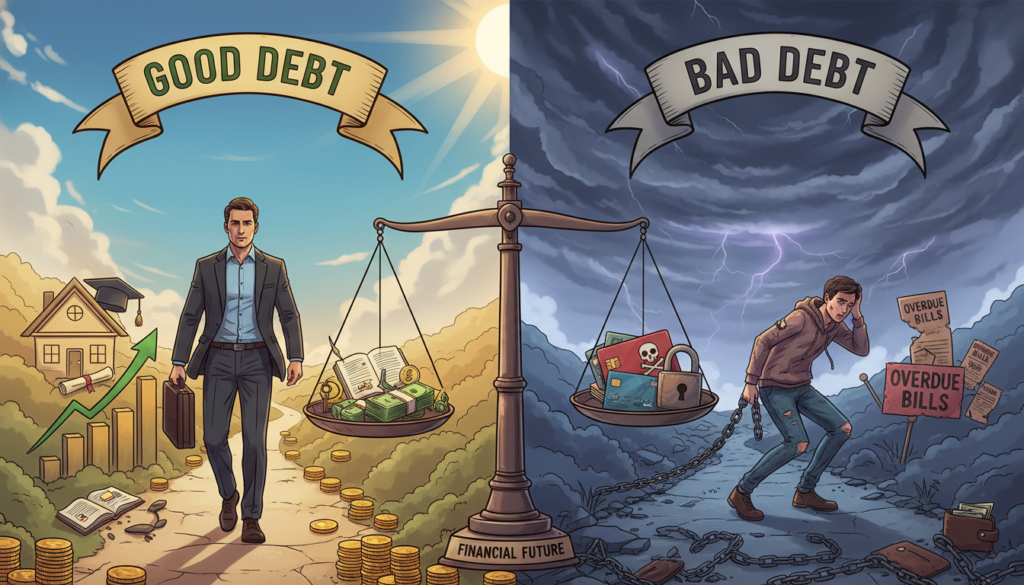
Have you ever wondered whether borrowing can ever help you build wealth, or if it will only drain your cash and credit?
Many Americans carry large balances; recent studies show the average adult holds over $105,000 in total obligations. That number makes it crucial to tell which borrowing supports your long-term plan and which choices hurt your finances.
Understanding the difference helps you decide if a mortgage, student loan, or credit card purchase moves you toward net worth or away from it.
We’ll give clear examples and practical advice so you can review loan terms, watch interest rates, and protect your cash flow. For a deeper primer on how credit factors in, see this helpful guide.
Table of Contents
- Understanding the Basics of Good Debt vs Bad Debt Explained
- Defining Good Debt and Its Role in Wealth Building
- Common Examples of Productive Borrowing
- Identifying Bad Debt and Its Financial Risks
- How High Interest Rates Impact Your Financial Health
- Strategies for Managing and Eliminating Unwanted Debt
- The Role of Credit Scores in Your Borrowing Journey
- Taking Control of Your Financial Future
- FAQ
Understanding the Basics of Good Debt vs Bad Debt Explained
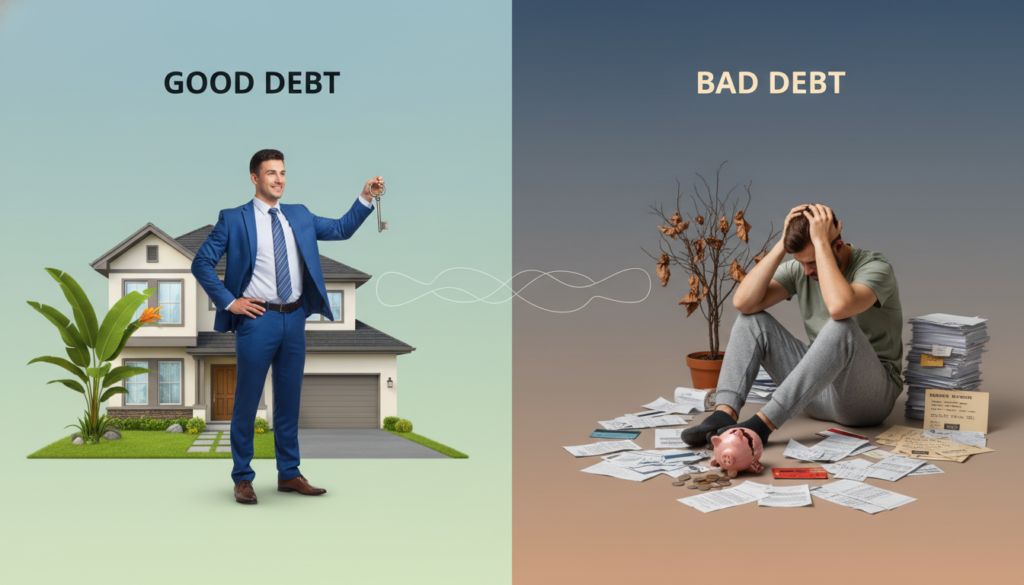
Understanding how the purpose and cost of borrowing affect your finances helps you choose wisely. Look at the APR and the expected return on what you buy with the loan.
Experts often use 6% APR as a benchmark: loans under that rate may support building value, while higher rates can strain your monthly cash. Monitor the interest to see the total cost over the life of a loan.
- If borrowed money creates future income or value, it tends to help your net worth.
- High-interest credit quickly erodes cash flow — a clear example of how poor terms hurt you.
- A mortgage is commonly seen as productive because it secures a home and long-term value.
| APR Range | Typical Use | Impact on Cash |
|---|---|---|
| Under 6% | Home loans, some student or business loans | Lower monthly strain; can build equity |
| 6%–12% | Personal loans, some credit options | Moderate cost; needs solid repayment plan |
| Over 12% | High-rate cards, payday alternatives | High cost; threatens monthly cash |
For reliable information on how different borrowing affects credit and long-term plans, read this difference between types of borrowing. If you are planning to buy a home, see preparing to buy a house for practical steps.
Defining Good Debt and Its Role in Wealth Building

Borrowing can be a tool that increases your assets when used with a clear plan. When you take on loans to buy appreciating items, you can raise your net worth over time.
The Connection to Net Worth
Assets financed by borrowing like a home often become your largest source of equity. Each payment shifts value from liability into ownership, boosting your net worth as the loan balance drops.
Investing in Future Income
Using credit to fund education or start a business can increase your earning power. You spend money now to gain higher income later.
- Consider tax rules: interest on some loans may be deductible under IRS guidelines.
- Balance assets and liabilities so borrowed money works toward wealth, not loss.
- Review the loan rate and time horizon to ensure the purchase adds value.
| Purpose | Typical Effect on Wealth | Key Consideration |
|---|---|---|
| Home mortgage | Builds equity; long-term appreciation | Rate, down payment, local market value |
| Student loan | Raises future earning potential | Field of study, repayment plan, tax rules |
| Business loan | Funds growth and future profit | Business plan, projected cash flow, interest |
Take the time to review your credit use and loans so your borrowing fits your financial situation. For a practical primer on how to spot productive borrowing, see this smart borrowing guide.
Common Examples of Productive Borrowing
Borrowing can be a tool when it funds something that raises your future income or value. Below are clear examples you can evaluate for your plans.
Mortgages and Home Equity
A mortgage lets you buy a home that can appreciate and add to your net worth. The median home equity in the U.S. is about $203,000, which shows how ownership builds value over time.
Use a sensible down payment and a competitive mortgage rate to limit monthly strain and grow equity.
Student Loans for Career Growth
Student loans often fund education that raises lifetime earnings. The U.S. Bureau of Labor Statistics reports college graduates earn about $613 more per week than those with only a high school diploma.
Borrow an amount aligned with expected first-year salary so monthly payments fit your budget and protect credit.
Business Financing
Loans for equipment, marketing, or commercial space let entrepreneurs expand and generate cash. When revenue exceeds the cost of borrowing, the loan becomes a way to build wealth.
| Example | Primary Benefit | Key Metric |
|---|---|---|
| Mortgage | Builds equity and worth | Median equity ≈ $203,000 |
| Student loans | Higher lifetime earnings | +$613/week (BLS) for grads |
| Business loan | Funds growth and income | Projected cash flow vs rate |
Always calculate the total amount you need to borrow and choose a reasonable interest rate. For more on property investment as a way to boost net worth, see real estate investment basics.
Identifying Bad Debt and Its Financial Risks
Some loans drain your wallet without adding lasting value to your finances.
High-rate borrowing usually creates this problem. A 2024 Experian study found the average American carries nearly $6,730 in credit card debt, which often bears steep interest.
Card balances that carry month to month can balloon fast. When you use credit cards for purchases you cannot afford, you pay a premium for items that lose value.
Other risky types include payday loans and repeated personal loans used for daily expenses. These options can trap you in a cycle of borrowing and regular fees.
- Watch for high APRs and frequent fees that erode savings.
- Avoid using loans to cover routine expenses; that often signals a budget gap.
- Spot patterns of recurring card debt and act early to cut interest costs.
| Type | Typical Risk | What to Watch |
|---|---|---|
| Credit card debt | High APR; compounding interest | Carried balances, late fees |
| Payday loans | Exorbitant fees; short term traps | Very high annual rates |
| Personal loans for expenses | Cycle of borrowing | Repeated withdrawals for bills |
Takeaway: review monthly expenses, prioritize paying high-rate balances, and redirect freed money toward savings or your home and long-term goals.
How High Interest Rates Impact Your Financial Health
High interest charges can turn a small balance into a long-term burden faster than most people expect.
Understand the role of rates. Experts often mark loans with an APR of 6% or more as high. That level makes repayment harder and raises the total you pay.
The Danger of Compounding Interest
Compounding interest means you pay interest on interest. Small balances can balloon when interest compounds each cycle.
- High interest rates make card balances grow faster than you pay them down.
- Prioritize any loan or card with a high interest rate to limit losses to interest.
- If you have multiple credit cards with high rates, consider a consolidation approach to lower costs.
- Monitor statements so you know the exact interest on each account and can act quickly.
| Issue | Typical Effect | Action |
|---|---|---|
| High APR (≥6%) | Payments mostly cover interest | Refinance or target payoff |
| Carried card balances | Compound growth of owed amount | Shift to lower-rate loan |
| Multiple accounts | Tracking errors, extra fees | Consolidate or automate payments |
Take control: reduce reliance on high-rate credit, which can improve your credit and open better loan options. For planning help, see a guide on long-term borrowing and home affordability: long-term borrowing and home affordability basics.
Strategies for Managing and Eliminating Unwanted Debt
You can cut interest costs and free up cash by picking the right repayment strategy. Start with a clear plan that lists balances, rates, and monthly minimums.
Debt Consolidation Options
Combine high-rate accounts into one lower-rate loan to simplify payments and lower interest. A personal loan can replace several credit balances and reduce what you pay each month.
Consider a balance transfer to a card with a zero-interest intro period if you can pay the balance before the promotion ends. If student loans burden you, look into consolidation or income-driven plans to ease monthly strain.
Building an Emergency Fund
Aim for three to six months of expenses so you use cash, not credit, for surprises. This prevents reliance on credit cards or payday products that trap you in cycles of high cost.
Paying bills on time protects your credit and makes future loans cheaper. If you feel overwhelmed, seek credit counseling for a tailored plan and support.
| Action | Primary Benefit | What to watch |
|---|---|---|
| Consolidation loan | Single payment, lower interest | Origination fees, total term |
| Balance transfer | Temporary 0% interest | Intro length, transfer fee |
| Emergency fund | Cash for unexpected costs | Build slowly; start small |
Creating and following a payoff plan is the first step to regain control of your finances. For an in-depth look at how borrowing choices affect long-term goals, see this helpful guide.
The Role of Credit Scores in Your Borrowing Journey
Your credit score shapes the cost and access you get when you apply for a loan or a new card. In the U.S., scores range from 300 to 850. Lenders use this number and your debt-to-income ratio to decide eligibility and rates.
Carrying too much bad debt can lower your score. That makes it harder and more expensive to borrow for a home or car.
Keep utilization low use a small share of your available limits. Low use signals responsible habits and keeps interest offers more favorable.
- Pay on time consistent payments boost your score faster than many other steps.
- Address accounts in collections quickly to limit long-term damage.
- Check your credit report regularly to catch errors and incorrect information.
| Metric | Why it matters | Quick action |
|---|---|---|
| Score (300–850) | Determines rates and approval | Pay on time; lower balances |
| Credit utilization | Major factor in scoring | Keep below 30% (ideally 10%–20%) |
| Collections | Severe score damage | Dispute errors; negotiate payoffs |
| Recent inquiries | Short-term rate impact | Limit new applications |
Final advice: treat your score as a reflection of daily choices. Manage balances and payments, check reports, and you’ll widen access to better loans and lower interest. That keeps more money working toward your goals.
Taking Control of Your Financial Future
Small, steady moves like lowering high rates and tracking balances change your financial course. Create a short plan that ranks loans and card accounts by rate, then attack the highest costs first. Use cash for surprises and avoid repeated reliance on payday or revolving credit.
Focus on choices that raise your net worth and limit liabilities. Manage student loans with a repayment strategy, reduce credit card debt, and shop for better interest rates when possible. For property buyers, learn key closing and ownership terms with this real estate listing terms guide to protect value. Stay informed, seek professional advice when needed, and review your plan regularly to keep more money working for your goals.
FAQ
What is the difference between productive borrowing and harmful borrowing?
Productive borrowing may build wealth or income, while harmful borrowing often creates expensive long-term financial pressure.
How do interest rates affect whether a loan is worthwhile?
Interest rates determine total repayment cost and strongly influence whether borrowing supports or harms financial growth.
Are student loans always a smart investment?
Student loans can help when education increases income potential, but excessive borrowing may create long-term debt burdens.
When is a mortgage a good use of borrowing?
A mortgage may build equity and stability when payments remain affordable and long-term housing needs are clear.
How should you prioritize paying off multiple balances?
Focus on high-interest balances first or use structured repayment strategies like avalanche or snowball methods.
Can consolidating balances improve my financial position?
Debt consolidation may reduce interest costs, simplify payments, and improve overall monthly cash flow management.
What role does credit score play when you borrow?
Higher credit scores often qualify for lower interest rates and better financing opportunities from lenders.
How does compounding interest make some balances worse over time?
Compounding increases debt growth because interest charges continue accumulating on previous unpaid interest balances.
What are safe steps to cut risky balances and protect your finances?
Reduce discretionary spending, build emergency savings, and target high-interest accounts with structured repayment plans.
How do you decide whether to borrow for a business or expansion?
Evaluate expected returns, cash flow projections, operational risks, and long-term repayment sustainability before borrowing.
Is it ever smart to use credit cards for everyday purchases?
Using cards responsibly may provide rewards and convenience when balances are paid in full each month.
What should you do if a sudden expense pushes you toward high-rate borrowing?
Explore emergency savings, payment plans, or lower-cost alternatives before considering expensive short-term financing options.
How can borrowing affect your long-term net worth?
Strategic borrowing may build assets, while persistent high-interest debt can reduce savings and long-term financial stability.
When should you consult a professional about your loans and credit?
Seek professional guidance when debt becomes unmanageable or when exploring refinancing, consolidation, or repayment strategies.
If you want to know other articles similar to Good Debt vs Bad Debt Explained What You Need to Know You can visit the category Debt.
How Debt Affects Finances What You Need to Know

Credit Score Basics USA Made Simple for Your Financial Goals

How Lenders Evaluate Credit and What You Should Know

Credit Report Explained USA Tips to Understand Yours

Improve Credit Score USA with These Simple Tips

How Credit Score Works USA and Why It Matters to You
Leave a Reply
VISIT THESE INTERESTING ARTICLES📚