

Fixed vs Adjustable Mortgage USA How to Choose Yours
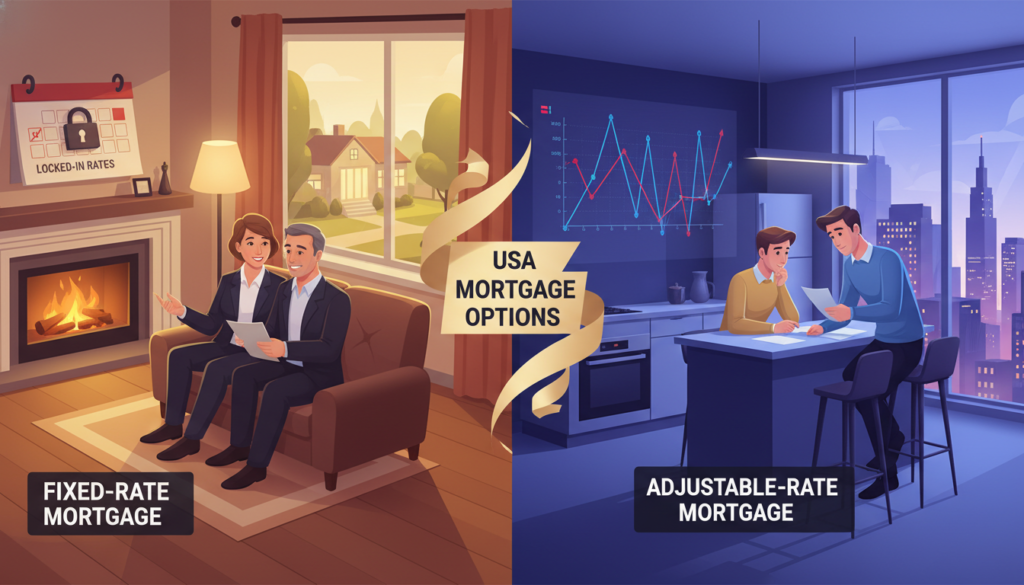
Which loan type could save you thousands or leave you overpaying? The choice you make now affects your monthly payment, interest cost, and long-term plans for your home.
Understanding the basics helps you weigh steady payments against lower initial rates and flexible terms. A 30-year or 15-year plan gives predictability, while an arm often starts with a lower introductory interest rate that can change after the initial period.
This short guide gives clear data and an example so you can compare payment paths. You’ll learn how rate changes influence totals, what an introductory period means for your monthly payments, and how to think about pros cons when picking loan types.
For more detail on long-term predictability and adjustment rules, see this comparison guide and this practical data-driven review.
Table of Contents
Understanding the Basics of Fixed vs Adjustable Mortgage USA
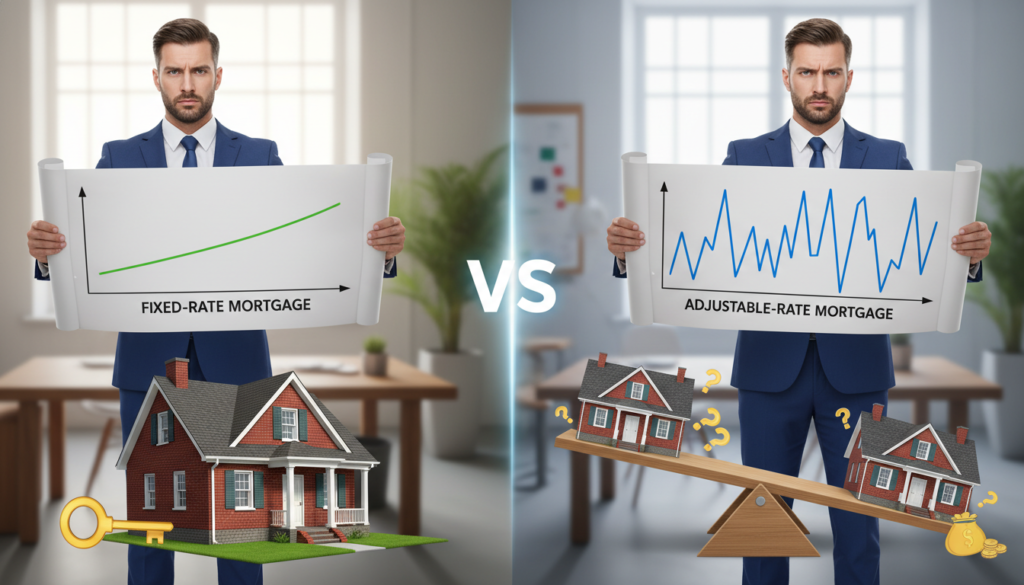
First, learn how rate behavior shapes your monthly payment and long-term cost. A fixed-rate mortgage keeps the interest rate the same for the life of the loan. That means your principal and interest payment stays predictable for many years, which helps with budgeting.
In contrast, an adjustable-rate mortgage starts with a set period and then the interest can change at preset intervals. When the rate resets, your monthly payment may rise or fall based on market indexes and the loan's caps.
Key points to weigh:
- Predictability: Fixed-rate mortgages lock a steady interest and payment.
- Initial savings: ARMs often begin with a lower rate for a limited period.
- Payment variability: After the initial period an arm can change payments at scheduled intervals.
Remember that taxes and homeowners insurance can still change your total monthly bill, even with a steady interest rate. If you want a deeper look at how interest affects totals, read this mortgage interest explained.
How Fixed-Rate Mortgages Provide Long-Term Stability

When your rate does not change, your monthly principal and interest stay the same for the life of the loan. That steady structure removes a major worry from home ownership and makes long-term planning easier.
The Role of Interest Rate Consistency
Consistent interest rates mean the portion of your monthly payment that goes to principal and interest won't change. You avoid market-driven swings that can suddenly raise your required payment.
This stability helps you forecast expenses, build savings, and compare other options without guessing future rate shifts.
Benefits for First-Time Buyers
For many first-time buyers, predictable payments make budgeting manageable during the first critical years of ownership.
Government-backed loans often favor a stable structure to help new homeowners secure reliable financing. If you plan to stay in your home for many years, this option often outweighs short-term rate savings.
- Peace of mind: Your principal interest payment is protected from market swings.
- Budget ease: Monthly payments stay constant across years, simplifying household finance.
- Supportive options: Many FHA and VA products use steady rate structures to assist buyers.
For more on long-term predictability and loan choices, see this detailed comparison and a practical loan options review.
The Mechanics of Adjustable-Rate Mortgages
An adjustable plan links your loan rate to a market index, which changes how much you pay over time.
Understanding Indexes and Rate Caps
How it works: Your loan interest rate is tied to an index such as the Secured Overnight Financing Rate (SOFR). Lenders add a margin to that index to set your new loan interest rate at each reset.
Most arms begin with a lower interest rate during an introductory period. A 5/1 ARM, for example, stays fixed for five years then adjusts every six months. A 7y/6m plan holds the rate for seven years before semiannual changes.
Protections: Rate caps limit how much your rate can increase at each adjustment and across the life loan. That cap is key to estimating future payments and possible increases.
"Know the index, the margin, and the caps before you commit."
- Your monthly payment depends on the index plus margin.
- Lower interest early can save you money if you move or earn more.
- Learn specific program rules like those in the 203(k) ARM details.
For practical home-buying steps, see preparing to buy a house.
Key Differences in Costs and Requirements
Upfront rates, required cash at closing, and market swings shape long-term affordability.
Initial Interest Rate Comparisons
Initial offers often show an arm with a lower interest for the intro period. That lower interest rate can reduce your monthly payment early on.
However, the long-term loan interest rate may rise after resets. Compare the introductory rate and the margin your lender applies.
Down Payment Minimums
Conventional arms usually require about a 5% down payment, while many conventional fixed options may start near 3%.
Your credit score also affects the interest you qualify for and the amount a lender will accept.
Impact of Market Volatility
Many lenders tie rate changes to the Secured Overnight Financing Rate (SOFR). Market volatility makes SOFR move, and that affects your monthly payments on an arm.
"An initial lower rate can help your budget now but plan for increases later."
| Feature | Intro Rate | Down Payment | Long-term Risk |
|---|---|---|---|
| Typical arm example | Lower initial interest | 5% minimum | Rate can rise with SOFR |
| Typical fixed example | Higher starting rate | 3% possible | Stable monthly payments |
- Use lender data to check margin and index when you compare offers.
- See a detailed comparison at arm vs fixed guide and learn affordability basics at home affordability basics.
Evaluating Your Financial Goals and Timeline
Deciding which loan suits you begins with a clear view of your future income and timeframe. Start by listing how many years you expect to stay in the home and whether your salary will remain stable.
If you plan to move within a few years, lower initial payments from an arm can help your cash flow. But if you want long-term security, a fixed-rate mortgage often eases stress by keeping your monthly payment predictable.
Run two quick scenarios: one that assumes steady income and one with modest raises. Compare projected monthly payments and how a rising interest rate would affect affordability.
Be conservative: make sure your budget covers the payment if the rate resets to the contract maximum. That keeps you safe if market rates climb.
- Weigh short-term savings against long-term cost and risk.
- Ask what your payments look like if rates rise to the cap.
- Consider whether higher future income will let you absorb payment swings.
"Plan with the worst-case payment and the most likely income path to choose with confidence."
For tools and deeper planning, review an ARM planning guide and our mortgage basics article to model payments and outcomes.
Making the Right Choice for Your Homeownership Journey
Your best choice depends on your credit profile, how long you plan to stay, and how much you can accept if the interest rate rises.
If you value steady payments, borrowers who want long-term stability often choose fixed-rate loans. If you expect to move or refinance within the introductory period, an arm can offer lower initial payments.
Always confirm your loan has a clear rate cap to limit potential increases. For a 7y/6m arm, you get seven years of the initial payment pattern before the lender adjusts the rate to the current index.
Review your income, credit, and reserves. Compare offers from lenders and run simple scenarios so you understand pros and cons. Learn more about how a mortgage works at how a mortgage works.
If you want to know other articles similar to Fixed vs Adjustable Mortgage USA How to Choose Yours You can visit the category Mortgage.
How Interest Rates Work USA What You Need to Know
Top Factors Affecting Mortgage Rates USA
Fixed vs Variable Rates USA What You Need to Know

Understanding APR in Mortgages A Beginner’s Guide

FHA loans explained USA What you need to know

Mortgage Options Explained A Guide to Your Best Choice
Leave a Reply
VISIT THESE INTERESTING ARTICLES📚