

Fixed vs Variable Mortgage USA How to Choose Yours
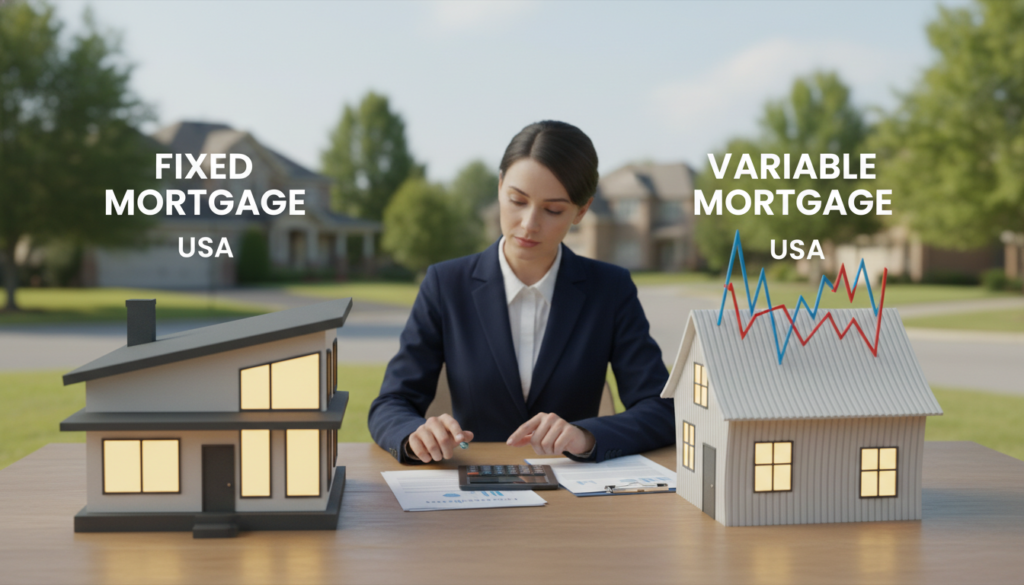
Which loan type will protect your budget if rates shift and which one might save you money over time?
You’re about to decide one of the biggest financial choices for your home. Understanding how a fixed-rate mortgage compares to a variable rate option helps you match a loan to your timeline and tolerance for risk.
A fixed-rate mortgage gives stability by keeping your rate and monthly payment steady for the term. A variable rate moves with the market and can lower costs if rates fall, but it can also raise your payments if interest climbs.
Before you choose, learn how different types of loans work, how many years you plan to stay, and how changes in the market could affect your budget. For a clear explainer on options and trade-offs, see this guide from NerdWallet.
Ready to prepare? Practical steps for buyers are outlined at TipsLends, so you can weigh stability, risk, and long-term goals before you lock a term.
Table of Contents
Understanding the Basics of Your Mortgage Options

Begin with the basics: how lenders set an interest rate and what that means for your payments.
The interest rate for a fixed-rate mortgage is locked for the full term, which gives you budget certainty and protects your home payment from market swings.
With a variable rate, your overall payment schedule is set, but the interest portion can change as the market moves. That means your interest cost may rise or fall during the loan.
- Every loan has an interest rate that shapes total cost over the life of the loan.
- Some lenders offer an arm that starts with a locked period and then adjusts.
- Understanding how payments are calculated helps you plan taxes, savings, and cash flow.
Stay informed about current rates and compare offers. For a detailed comparison of common options see this rate guide, and review loan terms with this real estate glossary.
Why Borrowers Choose a Fixed Rate Mortgage

Many borrowers pick a steady-rate plan to remove payment surprises and make long-term budgeting simple.
Stability and predictability are the top reasons people select a locked interest option. When your interest rate stays the same, your monthly payment is steady for the term. That makes it easier to plan for taxes, repairs, and savings without guessing future increases.
You also gain clarity on total costs. With a known rate, you can calculate how much interest you will pay over the life of the loan. That helps you compare offers and decide if the higher starting price is worth the peace of mind.
Common Fixed Loan Types
Beyond standard home lending, common steady-rate loans include auto loans and home equity loans. Some lenders also sell an arm that begins with a locked period, but for pure stability many borrowers pick a traditional, locked-rate product.
| Loan Type | Typical Use | Why Borrowers Choose It |
|---|---|---|
| 30-year fixed-rate | Primary home purchase | Lowest monthly predictability; easier long-term budgeting |
| 15-year fixed-rate | Faster payoff, equity build | Lower overall interest cost; stable payments |
| Home equity loan | Large home projects | Set rate for a known repayment schedule |
| Auto loan | Vehicle purchase | Predictable monthly payment over the term |
For a deeper look at whether a steady-rate option fits your situation, read this guide on choosing the right plan and explore affordability basics at home affordability explained.
The Mechanics of a Variable Rate Mortgage
An adjustable rate loan ties your interest rate to market benchmarks, so your monthly payment can shift as rates move.
How Adjustable Rate Mortgages Function
The lender sets your rate using an index plus a margin. That combined figure becomes the published rate on your loan.
If the index climbs and your interest increases, your payments may go up. If rates drop, your cost can fall too.
- Adjustments occur on a schedule after any initial fixed period an arm may offer.
- If you hit a trigger rate where payments don't cover interest, contact your lender immediately to discuss options.
- You take on more risk but may save money if market rates decline or you sell before increases hit.
| Feature | What to Expect | Why It Matters |
|---|---|---|
| Index + margin | Determines changing rate | Explains why payments vary |
| Initial period | Often lower rates early on | Good for short stays or refinancing plans |
| Payment adjustments | May rise if interest rises | Budget for possible increases |
For a deeper look at benchmarks and protections, review this rate guide and ask your lender how your specific loan handles adjustments.
Comparing Fixed vs Variable Mortgage USA Options
A clear side-by-side look helps you see how each loan will affect your budget and long-term plans.
Predictability A fixed rate keeps your monthly payment steady, making budgeting simple. You pay a known interest rate for the term, so planning costs is easy.
Flexibility A variable rate often starts lower and can save you money if rates drop. Many borrowers like that it usually carries smaller prepayment penalties, often capped at three months' interest.
| Feature | Fixed rate | Variable rate |
|---|---|---|
| Monthly predictability | High | Can change |
| Initial cost | Often higher | Often lower |
| Prepayment penalty | May be sizable | Usually smaller; often capped at 3 months' interest |
| Conversion option | Not applicable | Can convert to a fixed rate to lock costs |
Use this comparison to weigh stability against potential savings. If you want more detail on how rates adjust and how conversion works, compare fixed and adjustable options. If your timeline includes a planned sale, check timing tips at best time to sell.
Key Risks and Market Considerations
Understanding risk helps you avoid costly surprises. Review how rising interest and market swings can change your monthly payments and long-term costs.
Impact of Rising Interest Rates
When interest rates climb, your rate can move higher and your monthly payment may rise. That can strain your budget fast, especially if you have an adjustable rate or short initial period.
Prepayment Penalties
Breaking a closed contract can trigger heavy prepayment penalties. Ask your lender for exact figures before you sign. Some loans carry smaller fees, but others can be costly if you sell or refinance early.
Economic Volatility
Rapid market change can push rates up several percentage points in a short span. An arm is especially sensitive; borrowers should plan for sudden increases and build a buffer in savings.
| Risk | What it means | Action to take | Who it affects most |
|---|---|---|---|
| Rising rates | Higher interest raises payments | Budget extra for increases | Adjustable borrowers |
| Prepayment penalty | Fee for breaking contract | Check lender terms before signing | Anyone planning to move/refinance |
| Market volatility | Fast, unpredictable rate moves | Keep reserve cash and review options | Short-term owners and arms |
| Index shifts | Changes in benchmark affect your rate | Ask how index and margin work | Those with adjustable plans |
Stay informed and ask questions. For an overview of payment choices and protections, see this comparison on monthly payment options and practical buy tips at how to buy a house.
Making the Right Choice for Your Financial Future
Deciding now will shape your budget and comfort for years to come. Weigh the stability of a fixed option against the flexibility of a variable rate, and match that choice to your credit, term, and how long you expect to stay in your home.
Make sure monthly payments fit your budget and leave room for taxes, insurance, and repairs. Build a reserve for when interest rates climb so you can absorb shocks without stress.
Compare multiple loans, read the fine print about prepayment and an arm, and consult a trusted lender. For guidance on how to choose between options see this how to choose between fixed and variable, and review budgeting essentials at the real estate listings guide.
With clear facts and a plan, you can pick the loan that protects your long‑term financial life and lets you enjoy your home with confidence.
FAQ
What is the main difference between a fixed-rate loan and an adjustable-rate option?
Fixed-rate loans maintain stable payments, while adjustable-rate options may change with future market interest movements.
How do interest-rate changes affect my monthly payment with an adjustable loan?
Rising rates can increase payments, while falling rates may reduce monthly mortgage obligations over time.
Why might you pick a steady-rate option over a rate that can move?
Stable-rate loans provide predictable payments and protection against future market volatility or rising interest costs.
Are there specific loan types that offer predictable payments?
Fixed-rate mortgage products commonly provide long-term payment consistency and easier household budgeting stability.
How does an adjustable-rate mortgage (ARM) work during the initial period?
ARMs begin with lower introductory rates before periodic adjustments based on financial market indexes and lender margins.
What are common risks if interest rates rise sharply?
Rapid increases may significantly raise monthly payments and create affordability pressure for adjustable-rate borrowers.
How do prepayment penalties affect your loan choices?
Prepayment penalties may increase costs when refinancing or selling property before certain loan periods expire.
How should you weigh economic volatility when deciding between options?
Consider income stability, savings reserves, future plans, and comfort with changing monthly financial obligations carefully.
Can refinancing be used to change from a rate that moves to a steady one?
Refinancing may convert adjustable loans into fixed-rate products with more stable long-term payment structures.
What should you consider about credit and loan term when choosing a mortgage option?
Credit scores, repayment terms, rates, and total interest costs all influence long-term financing affordability decisions.
How do lenders protect borrowers from sharp rate increases on adjustable loans?
Many adjustable loans include periodic and lifetime caps limiting how much rates may increase over time.
Should you expect different costs if you choose a shorter term?
Shorter terms often reduce total interest paid but require higher monthly mortgage payment commitments.
What role does your time horizon play in the decision between steady and adjustable rates?
Long-term homeowners often prefer stability, while short-term buyers may benefit from lower introductory adjustable rates.
How can you compare offers effectively between lenders?
Compare APR, closing costs, loan terms, adjustment caps, customer service, and total projected repayment expenses.
What practical steps should you take before committing to a loan type?
Get preapproved, review loan estimates carefully, calculate future payments, and evaluate long-term financial goals thoroughly.
If you want to know other articles similar to Fixed vs Variable Mortgage USA How to Choose Yours You can visit the category Mortgage Loans.
Types of Mortgage Loans USA You Should Know About

Debt Consolidation Basics USA A Simple Guide for You

Debt Management USA Guide to Regain Financial Control

Good Debt vs Bad Debt Explained What You Need to Know

How Debt Affects Finances What You Need to Know

Credit Score Basics USA Made Simple for Your Financial Goals
Leave a Reply
VISIT THESE INTERESTING ARTICLES📚