

Top Factors Affecting Mortgage Rates USA
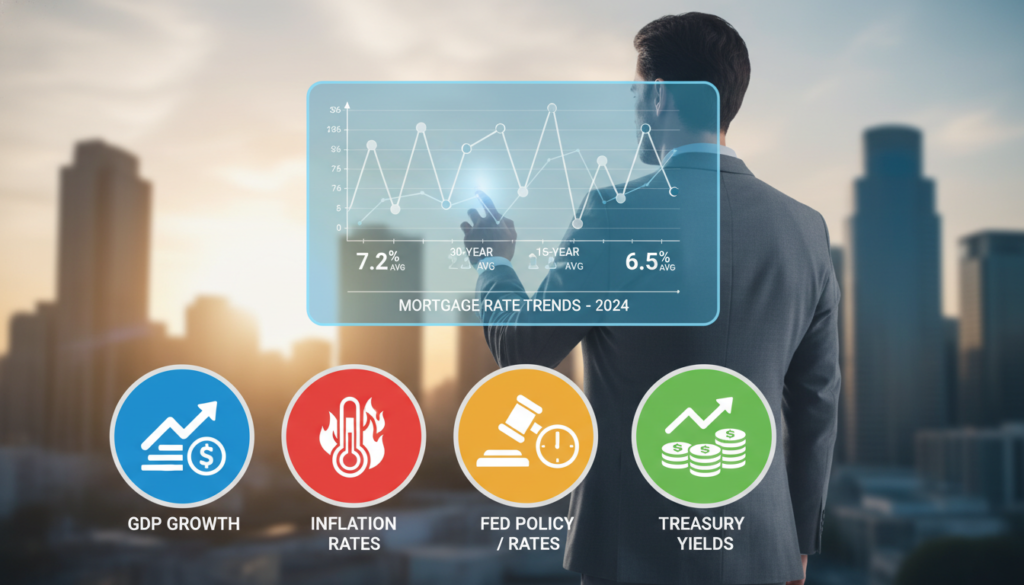
Have you wondered why your home loan cost can climb overnight, even when your credit looks solid? That surprising jump often comes from a mix of economic signals and lender choices that touch your monthly payment.
You can learn how the 10-year treasury and the federal reserve move together and why inflation or economic growth can change your interest.
The path from national policy to your loan is not direct. Lenders set a mortgage rate based on market trends, your credit score, and the loan term such as the popular 30-year mortgage. Understanding these links helps you plan whether to buy or refinance.
Want practical steps? See guidance on how credit and down payments matter at the Consumer Financial Protection Bureau, and prep tips for homebuyers at TipsLends.
Table of Contents
- Understanding the Basics of Mortgage Interest Rates
- Macroeconomic Factors Affecting Mortgage Rates USA
- How Government Policy and Global Events Influence Borrowing Costs
- Personal Financial Factors That Impact Your Specific Rate
- Comparing Lender Strategies and Loan Types
- Navigating Future Market Shifts with Confidence
- FAQ
Understanding the Basics of Mortgage Interest Rates

Interest on your home loan begins its journey in big markets, not at your local bank. Most mortgage interest is set where loans are bundled and sold as mortgage-backed securities in the secondary market.
"Lenders must adjust pricing to maintain spreads when Treasury yields rise,"
Your monthly payment reacts to small changes in the interest rate, so even a tenth of a percent can add thousands over the life of a loan. Lenders then look at your credit score and overall profile to decide the specific rate they offer you.
Loan term matters too. Shorter terms generally mean lower quoted rates but higher payments. Learn how broader market mechanics set price levels at how interest rates are set, and compare fixed and variable options at fixed vs variable mortgage.
Macroeconomic Factors Affecting Mortgage Rates USA

Broad economic signals often show up first in bond markets before they touch the interest you pay on a home loan.
Inflation and Bond Yields
Inflation pushes investors to demand higher returns. When consumer prices climb, the 10-year treasury yield typically rises and lenders pass that into the interest they quote.
The Role of the Federal Reserve
The federal reserve sets short-term policy that shapes the broader market. Historic moves matter: in 1981 the 30-year mortgage peaked at 18.63% while the Fed fought inflation.
"Even small policy shifts can shift long-term lending costs."
Economic Growth and Employment
Strong growth and low unemployment lift demand for loans. That demand often nudges your mortgage rate higher as lenders adjust pricing.
| Indicator | Typical Direction | Impact on Loan Pricing |
|---|---|---|
| Inflation | Up → yields up | Higher interest quoted by lenders |
| 10-year treasury | Up → follows | Direct correlation with long-term loan rate |
| Fed policy | Tightening → higher | Short-term cost signals that affect markets |
For deeper context on what drives your loan pricing, read what affects mortgage rates and a clear primer on mortgage interest explained.
How Government Policy and Global Events Influence Borrowing Costs
Government action and international turmoil often steer where capital flows and what you pay to borrow.
When investors seek safety, U.S. Treasuries usually win. That move can push the 10-year treasury yield down, which often pulls mortgage rates lower too.
Geopolitical Impacts on Market Stability
Global crises send money into safe assets. As Dennis Shirshikov of Summer.com notes, this flight can push the 10-year treasury yield lower and ease interest rates for a time.
Policy choices also change liquidity. In early 2026, the federal government ordered $200 billion in purchases by Fannie Mae and Freddie Mac to tighten spreads. That action helped lower a typical mortgage rate for many borrowers.
- Capital flows: Safe-haven buying lowers long-term yields.
- Policy moves: Large bond buys can narrow lender spreads.
- Demand shocks: Tax credits and housing programs can raise demand and modestly lift rates.
| Event | Market Reaction | Likely Effect on Borrowing Costs |
|---|---|---|
| International conflict | Safe-haven buying of Treasuries | 10-year treasury down → short-term drop in mortgage rates |
| Government bond purchases | Tighter spreads, more liquidity | Lower lender margins → lower mortgage rate for buyers |
| Stimulus or tax credit | Increased housing demand | Higher competition among buyers → upward pressure on rates |
For deeper reading on global shocks and their effect, see how global events affect mortgage rates. If you are planning a purchase, check guidance on how to buy a house in the U.S.
Personal Financial Factors That Impact Your Specific Rate
Your personal credit history and monthly obligations often decide the exact interest you pay on a home loan. Understanding what underwriters check helps you prepare for the best offer.
Credit Score and Debt Ratios
Your credit score shows how reliably you pay bills. A score of 740 or higher typically unlocks the most competitive mortgage rates.
Lenders also weigh your debt-to-income ratio. Keeping it near or below 36% helps you qualify for lower interest and a cleaner approval.
Down Payment and Loan to Value
A larger down payment lowers your loan-to-value (LTV) ratio and reduces risk for the lender. Lower LTVs commonly lead to a better rate and fewer added fees.
The property type matters too: a primary home usually gets a cheaper rate than an investment property.
- Pay discount points if you plan to keep the loan long-term to lower your quoted rate upfront.
- Check your score and reduce debts before you apply to improve your offers.
| Benchmark | Typical Target | Why it matters |
|---|---|---|
| Credit score | 740+ | Best chances for low mortgage interest rates |
| Debt-to-income | ≤36% | Shows capacity to handle monthly payment |
| Down payment | ≥20% | Reduces LTV and may lower your rate |
"Small improvements in credit or a larger down payment can lower the long-term cost of home financing."
For insight on why your quoted price may be higher than expected, read why your rate might be high. To check affordability basics, see home affordability basics.
Comparing Lender Strategies and Loan Types
Local lender strategies and loan design often create notable differences in what you pay. Competition in your area can compress margins, which may lower the quoted mortgage rates you see.
Preetam Purohit of Embrace Home Loans notes that operational capacity and local competition drive many of these changes. Lenders with larger volume or strong investor ties can offer tighter pricing.
- Fixed vs adjustable: A 30-year mortgage usually shows a different interest than an ARM because risk shifts over time.
- Government-backed loans: FHA and VA loans often carry lower interest since insurance reduces lender risk.
- Lender network: Business volume and investor access shape who can cut better deals.
"Choosing the right loan term and lender is as important as the headline number."
| Loan Type | Typical Interest | Best For |
|---|---|---|
| 30-year fixed | Stable, slightly higher | Lower monthly payment |
| 15-year fixed | Lower overall | Faster equity build |
| ARM | Starts lower, variable later | Short-term ownership or rates expected to fall |
When you compare offers, check lender volume, investor channels, and total costs. For current market listings, consult live mortgage rates and a primer on housing basics at housing market basics.
Watching bond markets helps you pick the right moment to lock in a home loan.
Monitor the 10-year treasury yield and headlines about the federal reserve. Those signals often presage shifts in interest and signal when to lock a mortgage rate.
Raise your credit score before you apply. A better score usually wins a lower mortgage and a smaller long-term payment.
Stay in touch with a local lender daily while you shop. Because rates can change many times a day, quick updates help you act fast.
Budget for possible adjustments, especially if you choose an adjustable product or plan to refinance later. For more on how market moves shape housing, see interest rates and the housing market and a practical real estate listings guide.
FAQ
What drives mortgage interest changes?
Your home loan interest moves with bond yields, especially the 10-year U.S. Treasury, and with decisions by the Federal Reserve. When Treasury yields rise, lenders often raise their lending charges to cover higher funding costs. Fed policy that tightens or eases short-term interest rates also shifts market expectations and pricing for longer-term loans.
How does inflation influence what you pay on a home loan?
Higher inflation erodes the buying power of future payments, so lenders demand higher compensation today. That pushes benchmark yields up and raises the price you pay for a long-term loan. If inflation cools, yields can fall and borrowing costs typically decline as well.
Why should you watch the 10-year Treasury yield?
The 10-year Treasury is a common reference for 30-year home loans. It reflects investor appetite for long-term fixed income and signals where lenders set their margins. Big moves in this yield often translate into comparable shifts in your mortgage charge.
What role does the Federal Reserve play in your monthly payment?
The Fed sets the federal funds rate and uses policy tools to meet inflation and employment goals. While it doesn’t set mortgage interest directly, its guidance and rate moves shape short-term funding costs and investor expectations, which in turn influence loan pricing from banks and nonbank lenders.
How do economic growth and jobs affect loan pricing?
Strong growth and falling unemployment can lift inflation expectations and push yields higher. Conversely, weak growth or rising jobless claims can lower yields as investors seek safer assets, which may reduce the interest you’re quoted for a mortgage.
Can global events change what you pay for a mortgage?
Yes. Geopolitical tensions, trade disruptions, or global financial stress can drive investors to U.S. Treasuries as a safe haven, lowering yields and often reducing borrowing costs. Alternatively, severe market turmoil can widen lender margins, increasing the spread you pay.
How does your credit score affect the rate you’re offered?
Your credit score is one of the clearest signals of borrower risk. Higher scores typically receive lower interest because lenders see less default risk. Improving your score before you apply can meaningfully reduce the long-term cost of your loan.
What impact does your debt-to-income ratio have on pricing?
A lower debt-to-income ratio shows you have more capacity to repay and often qualifies you for better pricing. High ratios can trigger higher interest or require additional safeguards like mortgage insurance, which increases your overall cost.
How does your down payment change your quoted interest?
A larger down payment reduces the loan-to-value (LTV) ratio, lowering lender risk and improving the interest you’re offered. Lower LTVs can also eliminate private mortgage insurance and lead to better loan terms and lower monthly payments.
Should you compare different loan types and lender strategies?
Yes. Fixed-rate and adjustable-rate loans price differently and suit different plans. Lenders compete on rate, points, fees, and underwriting standards. Shopping multiple offers and comparing APRs helps you find the most cost-effective option for your timeline and risk tolerance.
How can you prepare for future market shifts when planning a mortgage?
Locking a rate at the right time, maintaining strong credit, and planning a prudent down payment help you manage volatility. Monitor Treasury yields, Fed guidance, and inflation data; use rate-lock tools and speak with multiple lenders to understand options such as buydowns or adjustable terms.
What short-term indicators should you track to time your application?
Keep an eye on CPI and PCE inflation readings, weekly jobless claims, monthly employment reports, and movements in the 10-year Treasury yield. Fed statements and minutes often signal future policy shifts that can move loan pricing.
How do lender costs and competition affect the interest you pay?
Lenders set spreads over benchmarks to cover funding costs, credit risk, and operational expenses. In competitive markets, lenders may narrow spreads or offer promotional pricing. Conversely, tighter funding or higher defaults can widen spreads and raise your rate.
If you want to know other articles similar to Top Factors Affecting Mortgage Rates USA You can visit the category Mortgage.
Fixed vs Variable Rates USA What You Need to Know

Understanding APR in Mortgages A Beginner’s Guide

FHA loans explained USA What you need to know

Mortgage Options Explained A Guide to Your Best Choice

How Conventional Loans USA Can Help You Buy a Home

Your Guide to Types of Mortgages USA and How They Work
Leave a Reply
VISIT THESE INTERESTING ARTICLES📚