

Step-by-Step Property Buying Process USA Explained
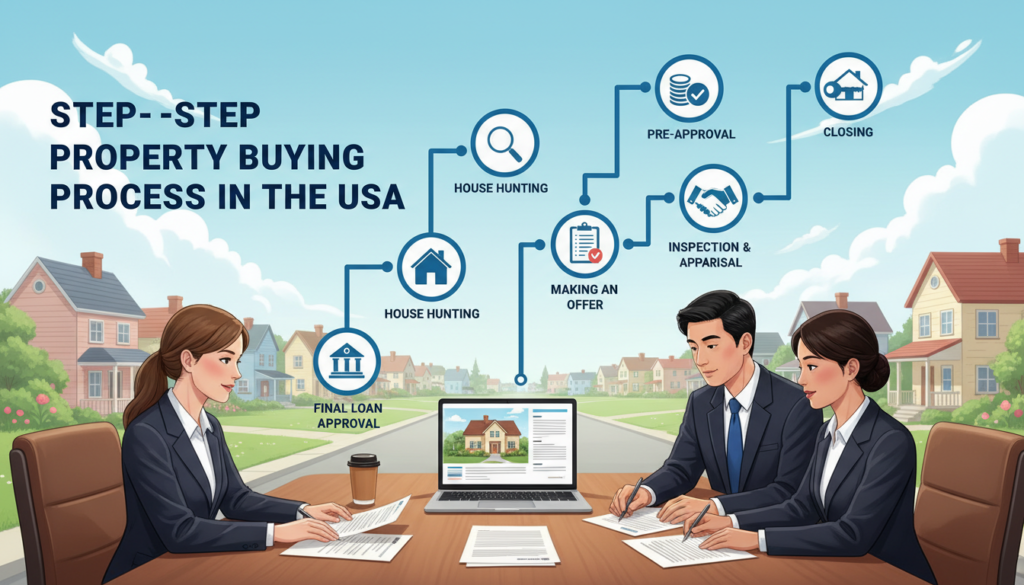
Have you ever wondered which single misstep costs buyers the most time and money when they try to buy a home?
This guide breaks the journey into clear, manageable steps so you can plan with confidence. Smart budgeting and timely research set the stage for success in a competitive market.
Start by assessing your finances, credit, and long-term goals. Small early actions like comparing lenders and gathering documents save weeks later.
Following a structured approach helps you avoid common pitfalls and keeps the timeline on track. For a deeper walkthrough of timelines and lender tips, see this practical guide on how to buy a house in the United States: how to buy a house in.
Table of Contents
- Assessing Your Financial Readiness
- Understanding the Property Buying Process USA
- Establishing a Realistic Housing Budget
- Securing Mortgage Preapproval
- Partnering with a Local Real Estate Agent
- Navigating the Home Search
- Making a Competitive Offer
- Managing Contingencies and Inspections
- Finalizing Your Loan Approval
- Completing the Final Walkthrough
- Navigating the Closing Table
- Transitioning Into Your New Home
- FAQ
Assessing Your Financial Readiness

A realistic snapshot of your credit, debts, and savings makes the rest of the journey smoother. Start here to see what loan size, rates, and monthly payment you can handle without stretching your budget.
Credit Score Basics
Maintaining a high credit score is essential because it directly influences the interest rate and terms a lender will offer. Review your report from Equifax or Experian and correct any errors before applying.
Tip: A better score often lowers your monthly payment and reduces long-term costs.
Debt-to-Income Ratio
Calculate your debt-to-income ratio to check affordability. A good rule of thumb is keeping total monthly debt payments under 43% of gross income.
- Include taxes and insurance when you total your monthly payment.
- Save enough money for a down payment to avoid private mortgage insurance on many home loans.
- Lenders will verify income stability to decide the maximum amount they will lend and grant approval.
"Reviewing credit and DTI early reduces surprises and speeds loan approval."
Understanding these basics helps you choose competitive rates and plan for closing costs. Use this foundation to compare preapproval offers with confidence.
Understanding the Property Buying Process USA

Clear coordination between your agent and lender prevents last-minute surprises during a home sale.
Financing drives most sales. Your mortgage loan application proves you can make payments and keeps the offer valid. Provide accurate income and documents early so the lender can verify your status without delays.
Work with a local real estate agent or estate agent who knows inspection norms and seller expectations. They guide you on timing, earnest money, and how current interest rates affect the offer price.
- Review all sale documents carefully.
- Schedule a home inspection and appraisal quickly.
- Coordinate loan milestones with closing dates.
| Milestone | Who | Why it matters |
|---|---|---|
| Preapproval | Lender | Confirms potential loan amount and interest rates |
| Offer & Earnest Money | You & Seller | Signals intent and secures the house while contingencies run |
| Inspection & Appraisal | Agent, Inspector, Appraiser | Validates condition and sale price before final approval |
For extra detail on timelines and legal steps when buying home in America, see this guide: buying property in America.
Establishing a Realistic Housing Budget
A smart budget begins by listing every ongoing expense you’ll face after you move in. Start with the obvious monthly bills, then add less frequent but predictable charges.
You must make sure your mortgage payment includes taxes and insurance. That prevents surprise bills that can strain your cash flow.
Include HOA fees, routine maintenance, and an emergency repair buffer. Factor closing fees, which typically add 2–5% to the purchase price.
- Plan for ongoing maintenance so you do not drain savings.
- Keep a dedicated fund for unexpected repairs.
- Track total cost of ownership, not just the initial price.
| Cost Category | Typical Range | Why It Matters |
|---|---|---|
| Monthly mortgage + taxes + insurance | Principal + escrow | Defines your long-term payment ability |
| Closing fees | 2%–5% of purchase price | Upfront cash needed at final step |
| Maintenance & HOA | $100–$600+/month | Can change monthly housing costs significantly |
Use a trusted budget tool or this budget guide to set realistic savings targets. A well-planned budget helps you save money and move through each step with confidence when you buy home.
Securing Mortgage Preapproval
Getting a solid mortgage preapproval clears the path for confident offers and smoother timelines. A preapproval letter shows sellers you are a serious, qualified buyer and defines the amount a lender will consider.
True preapproval means a lender verifies your income and credit up front. Joseph Kelly of ANM / ArcLoan calls this a "True" TBD pre-approval, which acts like a fully underwritten loan commitment.
Work closely with your loan officer to gather pay stubs, bank statements, and tax records. They will also guide you to compare rates from at least three lenders so you get the best terms and lowest long‑term costs.
Remember that the lender usually orders the appraisal after a signed contract. Manage your money carefully during preapproval avoid large purchases that could affect final approval or your monthly payment.
- A strong preapproval boosts offer credibility.
- True underwriting reduces surprises at closing.
- Most letters stay valid for 90 days, giving you time to search for the right home.
"A fully underwritten preapproval can make your financing as compelling as cash in many negotiations."
For a practical primer on lender readiness, see this guide to mortgage prequalification to help you prepare the paperwork and next step.
Partnering with a Local Real Estate Agent
Local agents turn complex market signals into clear guidance so you can focus on the right homes.
Why work with an agent? A good agent evaluates whether your budget matches the features you want. Paige Kruger of Signal Real Estate notes this helps set realistic expectations early.
Your agent will:
- Guide you through each step and keep timelines on track.
- Recommend neighborhoods that match your lifestyle and budget.
- Negotiate the offer price and terms to protect your interests.
"An agent who knows local inventory gives buyers a real advantage in a fast-moving market."
| Role | Benefit | When it helps |
|---|---|---|
| Local agent | Market insight, negotiation | From search to closing |
| Estate agent network | Access to off-market listings | Early lead on new houses |
| Your advocate | Better terms and guidance | Offer and inspection stages |
To learn more about the advantages of a local partner, see partnering with a local real estate.
The smartest searches begin with clear priorities and a local agent who narrows the field fast.
Start by listing must-haves and nice-to-haves. That helps you and your real estate agent filter listings so you do not waste time touring mismatched homes.
Viewing listings online is useful, but seeing a house in person shows you the neighborhood vibe and reveals any visible issues. Your estate agent will flag local market trends that affect final price and timing.
- Prioritize needs, then stay flexible on minor features.
- Ask your agent to pre-screen homes that match your budget.
- Be ready to make a quick, informed offer when the right home appears.
"Clear communication with your agent turns search time into decisive action."
For a practical look at timelines and milestones, see this home buying timeline to help plan your next step.
Making a Competitive Offer
A sharp, well-timed offer can turn a crowded market in your favor. Presenting clear terms and the right documents shows the seller you are serious and ready to close.
Start with proof. Include your preapproval letter and proof of funds with the offer so the seller and their agent can verify your ability to complete the sale quickly.
Understanding Earnest Money
Earnest money is a good‑faith deposit that shows intent. The typical amount ranges from 1% to 3% of the sale price.
The funds are held by a title company or escrow agent until closing. If contingencies clear, the deposit applies to your closing costs or down payment.
Handling Counteroffers
Your agent will help you respond to counteroffers and keep all terms and conditions in writing. You can accept, reject, or negotiate further to reach agreement.
Include an inspection contingency to protect yourself. If the inspection reveals major issues, you can negotiate repairs or credits, or walk away under agreed conditions.
- Tip: A concise, well-documented offer package raises your odds in a competitive market.
- Keep communications through your real estate agent to ensure clarity and protect your rights.
- For first-time guidance on assembling strong paperwork, see our first-time home buyer guide.
"A well-structured offer reduces friction and improves the chance the seller will pick your bid."
Managing Contingencies and Inspections
When the inspection report arrives, you gain clear choices: negotiate, accept, or walk away. A typical home inspection happens within 10 to 14 days after you sign the purchase papers. This step protects your money and time.
Your real estate agent will review the report with you and advise which repairs or credits to request from the seller. If major defects appear, you can cancel and keep your earnest money under a strong loan contingency.
- Submit inspection documents within the required days to avoid deadline issues.
- If the appraisal is low, be ready to renegotiate the offer or bring extra cash; appraisal fees usually run $450–$550.
- A professional inspection covers roof to foundation and creates a clear report for negotiations.
| Step | Who | Typical days / cost |
|---|---|---|
| Home inspection | Inspector / agent | 10–14 days |
| Appraisal | Lender / appraiser | $450–$550 |
| Decision | You / seller | Negotiate or cancel |
Tip: Learn more about handling contingencies in this guide on real estate contingencies.
Finalizing Your Loan Approval
Before you sit at the closing table, the lender must verify every detail of your financial file. Once the underwriter signs off on all conditions, your loan reaches clear to close and the lender can prepare final mortgage documents.
Keep your credit and finances stable. Do not take on new debt or make major purchases that could change your income or credit score.
Respond quickly to any lender requests for additional documents or updated bank statements and pay stubs. The underwriter will review the appraisal report to confirm the house value supports the mortgage amount you asked for.
Your estate agent coordinates with the lender and seller to ensure all conditions clear before the closing date. Review your loan estimate carefully to make sure the interest rate and closing costs match the terms you were promised.
| Action | Who | Why it matters |
|---|---|---|
| Update bank statements | You / Lender | Verifies available money for down payment and reserves |
| Appraisal review | Underwriter / Appraiser | Confirms value supports mortgage amount |
| Clear to close | Lender / Title | Allows final documents and closing date setup |
For a quick look at lender steps and timelines, see this guide to mortgage loan processing. Once approved, the lender sends the final package to the title company so you can complete the purchase with confidence.
Completing the Final Walkthrough
The final walkthrough is your last chance to confirm the house matches the terms you agreed on.
Schedule this visit shortly before the closing. Your estate agent or estate agent will arrange access so you can see the home one more time.
Bring your home inspection report and any related documents. Use them to verify negotiated repairs were completed and that no new issues appeared since your last visit.
- Check appliances, HVAC, plumbing, and electrical so systems work before the sale.
- Confirm personal items are removed and agreed repairs were finished.
- If you find discrepancies, your agent can address them with the seller before closing.
This step protects your interests and confirms the home you expected. It also reduces surprises when keys and final payment transfer and your loan documents reach the title company.
"A final walkthrough gives you peace of mind and a clear path to closing."
At closing, you’ll verify numbers, sign documents, and confirm the deal matches your expectations. Expect a focused meeting with your agent, the closing agent, and a representative from the lender.
Reviewing the Closing Disclosure
You must receive the Closing Disclosure at least three business days before signing loan documents. Use that time to check the interest rate, monthly payment, taxes, and final closing costs.
- Bring a government ID and the required money for your down payment and closing costs.
- The lender will wire loan funds to the title or escrow company after all documents are signed and notarized.
- Your real estate agent will attend to ensure the seller honors agreed terms and repairs.
| Action | Who | Why it matters |
|---|---|---|
| Sign final documents | You / Agent | Finalizes the loan and sale |
| Funds wired | Lender / Title | Enables deed recording and transfer |
| Deed recorded | Closing agent | Makes you the owner and completes the sale |
Review every page before you sign. Once the closing agent records the deed and payments clear, you receive the keys and the home is officially yours.
Transitioning Into Your New Home
The moment you step across the threshold, small choices shape how quickly your house feels like home. Follow simple steps now to protect your investment and start enjoying daily life.
Keep all closing documents in a safe place. These papers explain your mortgage, taxes, and any agreed closing costs, so you can access them when questions arise.
Set aside a budget for initial maintenance and unexpected costs. If interest rates fall, consider refinancing later to lower payments or shorten the term after you buy home.
Take time to celebrate. Meet neighbors, learn local services, and settle into the community—your commitment to this real estate journey has paid off and the next chapter begins.
FAQ
What are the main steps in the step-by-step property buying process in the United States?
You start by assessing your finances and credit, get preapproved with a lender, set a realistic budget, and hire a local real estate agent. Then you search listings, make an offer, complete inspections, finalize loan approval, and close the transaction.
How do I assess my financial readiness before house hunting?
Review your credit score, calculate your debt-to-income ratio, and gather income documents. Meet with a mortgage lender to estimate affordability and prepare funds for closing and repairs.
What credit score do lenders usually require for a mortgage?
Conventional loans often require scores above 620, while FHA loans may accept lower scores around 580 with a qualifying down payment.
How is debt-to-income (DTI) ratio calculated and what should it be?
DTI compares monthly debt payments to gross monthly income. Most lenders prefer ratios below 43%, although some programs allow higher limits.
How do I establish a realistic housing budget?
Include mortgage payments, taxes, insurance, HOA fees, utilities, maintenance, and emergency savings before deciding your maximum purchase price.
What hidden costs should I account for when buying a home?
Budget for closing costs, inspection fees, appraisal fees, moving expenses, insurance, taxes, and immediate repairs after purchase.
What does mortgage preapproval involve and why is it important?
Preapproval means a lender reviews your income, assets, and credit before issuing a conditional loan approval, which strengthens your buying position.
Why should I use a local real estate agent?
A local agent understands market conditions, pricing trends, negotiation strategies, and neighborhood details that help buyers make smarter decisions.
How should I approach the home search to find the right house?
Define must-have features, research neighborhoods carefully, compare listings, and visit multiple properties before making a decision.
How do I make a competitive offer without overpaying?
Study comparable sales, market demand, and seller motivation with your agent before submitting a fair but competitive offer.
What is earnest money and how much should I offer?
Earnest money is a deposit showing good faith when making an offer. It usually ranges between 1% and 3% of the home's purchase price.
How should I handle counteroffers from the seller?
Review revised terms carefully with your agent and stay within your financial limits before accepting or negotiating again.
What common contingencies should I include in an offer?
Financing, inspection, and appraisal contingencies are common protections that allow buyers to withdraw if major problems arise.
What happens during home inspections and how do I manage repair requests?
Inspectors evaluate structural and system conditions. Buyers can request repairs, negotiate credits, or cancel the contract if serious issues appear.
What is the loan approval stage after I have an accepted offer?
The lender verifies documents, orders an appraisal, checks insurance and title records, and clears all underwriting conditions before closing.
What should I check during the final walkthrough?
Verify repairs are complete, systems work properly, and the property's condition matches the agreement before signing closing documents.
What occurs at the closing table and what documents will I sign?
Buyers sign loan documents, pay closing costs, transfer funds, and finalize ownership through the title company or attorney.
What is the Closing Disclosure and when will I get it?
The Closing Disclosure explains final loan terms and fees. Lenders must provide it at least three business days before closing.
How do I plan the move and transfer utilities after closing?
Schedule movers, activate utilities, update your address, and organize insurance and tax records before moving into the property.
What taxes and ongoing costs should I expect after the sale?
Expect property taxes, homeowners insurance, maintenance, utilities, HOA fees, and long-term repair expenses after purchasing a home.
If you want to know other articles similar to Step-by-Step Property Buying Process USA Explained You can visit the category Real Estate.
Steps to Purchase a Home Internationally A Friendly Guide

Best Cities to Buy Property USA for Smart Investors

Your First Time Home Buyer Guide USA Made Simple

How to Buy a House in USA Your Complete Beginners Guide

Beginner Financial Literacy Basics You Need to Know

Navigating the Property Purchase Process USA Step by Step
Leave a Reply
VISIT THESE INTERESTING ARTICLES📚